
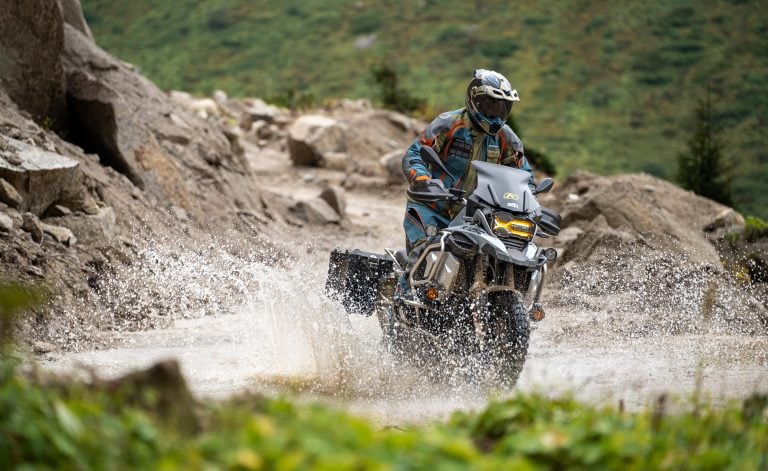
New riders often ask what motorcycle jacket they should buy. The answers they get are all over the map — leather, textile, mesh, “whatever’s comfortable,” “whatever’s cheap” — and none of them are particularly wrong, but none of them are particularly useful either. The real answer depends on where you ride, how often, what time of year, and what kind of rider you are or plan to become.
A motorcycle jacket is arguably the single most important piece of gear you own after a helmet. It’s the difference between road rash and not, between a bruised elbow and a broken one, between getting back on the bike next weekend and spending three months in physical therapy.
The marketing around motorcycle jackets is thick with hyperbole — every jacket is “premium,” every material is “next-gen,” every protection level is “top-tier” — but the actual quality range in this category is enormous, and it’s worth knowing what you’re looking at before you spend any money.
This guide walks through the best motorcycle jackets available right now across the key categories: mesh for hot weather, textile for versatility, and full ADV/touring for riders who need one jacket to do everything. If you already know what type you want — mesh, leather, cruiser-specific, heated — the site has dedicated deep dives on all of those.
The best mesh motorcycle jackets guide, the best leather jackets guide, and the heated jacket guide all go deeper on their respective categories. What’s here is the honest overview — the jackets worth considering for most riders, with real talk about what they do well and where they fall short.
The Best Motorcycle Jackets
1. Alpinestars T-GP Plus R V4 Airflow — Best Overall Motorcycle Jacket
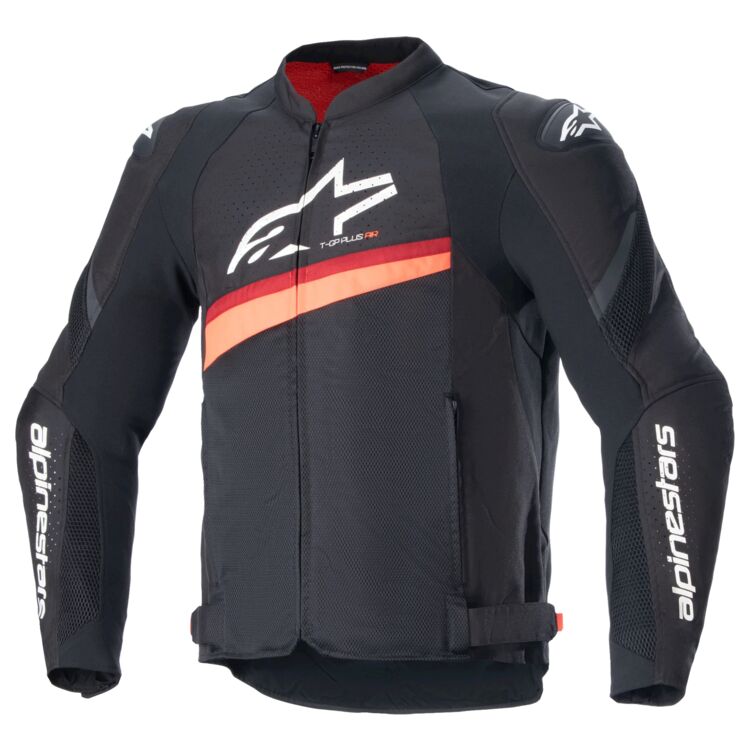
RevZilla’s own staff named this their top overall pick for 2025, and it’s hard to argue with the reasoning. The Alpinestars T-GP Plus R V4 Airflow is a sport-fit textile jacket built around ventilation — extensive mesh panels on the chest and back, perforated zones on the shoulders and forearms, stretch inserts under and along the inner arms for an ergonomic riding position. The result is a jacket that moves serious air at speed without the construction compromises you typically see at this price point.
The protection spec is legitimate. CE Class A certification, DFS Lite shoulder protectors, CE-rated elbow armor, and pockets prepared for a chest protector and back protector if you want to step up. The pre-curved arms are genuinely useful — the jacket is cut for the riding position, which means it doesn’t bunch up behind your elbows when you’re on the bars and doesn’t gap at the wrists when you reach forward. For a sport-fit textile jacket, that’s more rare than it should be.
The honest criticism: it runs small and the sizing is inconsistent enough that reviewers flag it repeatedly. Order carefully and check the size chart against your actual measurements, not your usual jacket size. The zipper durability has also drawn some complaints over time — it’s not a catastrophic flaw but worth knowing if you’re hard on gear. Some riders with broader shoulders and bigger chests find the fit pinches even after sizing up, which is a real limitation for the European cut.
At around $300 or so (sometimes more depending on the retailer), the T-GP Plus R V4 Airflow sits at the sweet spot where the protection spec and construction quality justify the price for most riders. It’s a natural fit for sport and naked bike riders who want a summer or three-season jacket that doesn’t look like construction equipment. If the sport fit isn’t right for your build, the summer jackets guide covers more relaxed-fit options in the same price range.
Check it out at Revzilla | Check it out at Amazon
2. REV’IT! Eclipse 2 — Best Budget Motorcycle Jacket

The Eclipse 2 is the jacket that keeps showing up on best-of lists because it genuinely earns its place there. At $199, it’s the most affordable jacket from a brand that makes gear people trust, and it doesn’t make the compromises you’d expect at this price.
Mesh panels front, back, and inner arms, 600D polyester in the impact zones, SEESMART CE-Level 1 armor at the shoulders and elbows, a back protector pocket, adjustable fit tabs at the waist and cuffs, and a wind catcher behind the front zipper that adds a surprising amount of utility on cool mornings.
The Eclipse 2 is genuinely versatile in a way that budget jackets often aren’t. The styling is clean enough to wear off the bike without looking like you just stepped out of a track day — it reads as a modern casual jacket, not as moto gear with the branding removed. Urban commuters and city riders get a lot out of this, because you can walk into a coffee shop in it without drawing stares. That’s a real and underrated feature if your ride ends somewhere besides a parking lot.
Where the Eclipse 2 shows its price: the CE-Level 1 armor is functional but not exceptional, and riders who want the best protection available will want to swap in aftermarket armor or add the SEESOFT back protector. The jacket is also solidly a warm-weather piece — there’s no liner, no waterproofing, and the mesh construction means you’re riding in the wind when the temperature drops. It’s not a four-season jacket and doesn’t pretend to be. The lightweight jackets guide has more context on what to expect from jackets in this construction class.
Customer reviews are consistently positive on fit and breathability, with the most common complaint being that the back protector is sold separately. That’s a $40–$60 addition worth budgeting for up front — add the SEESOFT back protector to your cart at the same time and the total is still under $260 for a genuinely well-protected, well-ventilated summer jacket from a company that stands behind their gear.
Check it out at Revzilla | Check it out at Amazon
3. Klim Marrakesh — Best Three-Season Motorcycle Jacket
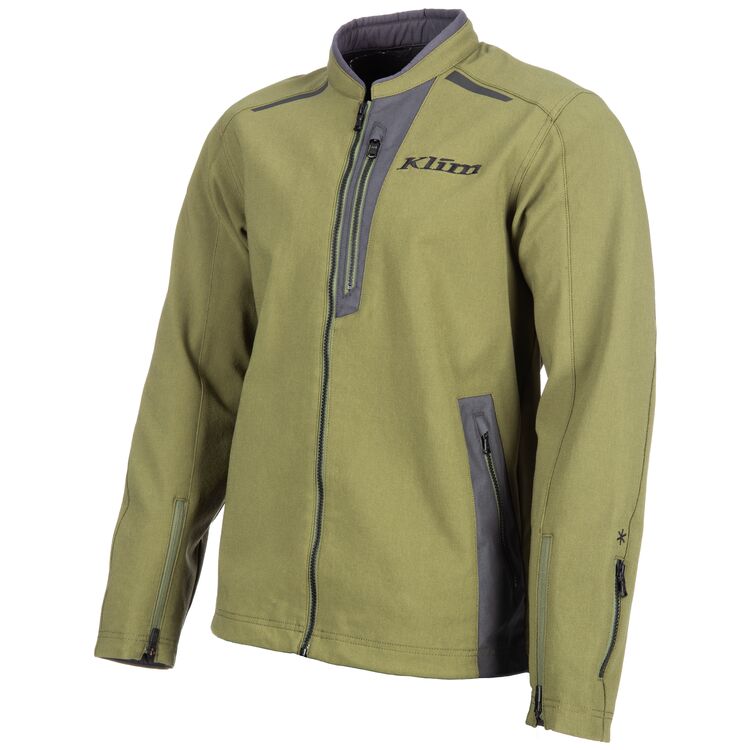
Klim builds gear for people who ride hard in serious conditions, and the Marrakesh is their answer to the question of what a non-mesh warm-weather jacket should look like.
The shell is 1000D Cordura woven from a 4-way stretch Karbonite Micromesh — the entire surface is porous, which means airflow isn’t limited to panel cutouts or perforations. It breathes uniformly, at all speeds, without the patchwork feel of a jacket that’s half solid material and half mesh window. The result is a jacket that handles summer heat better than most dedicated mesh jackets at lower speeds, where traditional mesh panels stop moving air effectively.
The D3O IP Ghost armor is a genuine upgrade from what you typically get at this price. Low-profile, flexible at rest, stiff on impact — you forget it’s there until it matters. The DWR treatment on the shell gives it light water resistance, enough to handle a brief shower without immediately soaking through, though it’s not a substitute for a proper waterproof layer in real rain. That’s the honest trade-off on the Marrakesh: it’s a brilliant three-season jacket for dry to mildly wet conditions, but it’s not a touring jacket in the REV’IT! Sand sense. If you ride through serious weather regularly, the Sand 5 below is the right call.
Sizing runs slightly large — customers notes recommend sizing down if you’re between sizes, which is the opposite of most European-cut gear. The sleeves also run long on some riders. It’s worth cross-referencing your measurements carefully before ordering. At around the mid four hundred dollar mark depending on colorway, it’s a premium price, but the Marrakesh has an unusually loyal following among riders who’ve owned it long enough to know how it wears over time. It’s the kind of jacket people buy a second time. The cruiser jacket guide is worth a look if you want this material approach in a more relaxed-fit cut.
Note on stock: The Marrakesh is available in several colorways on RevZilla — check current availability as some colors may be limited.
Check it out at Revzilla | Check it out at Amazon
4. REV’IT! Sand 5 H2O — Best Touring and ADV Motorcycle Jacket
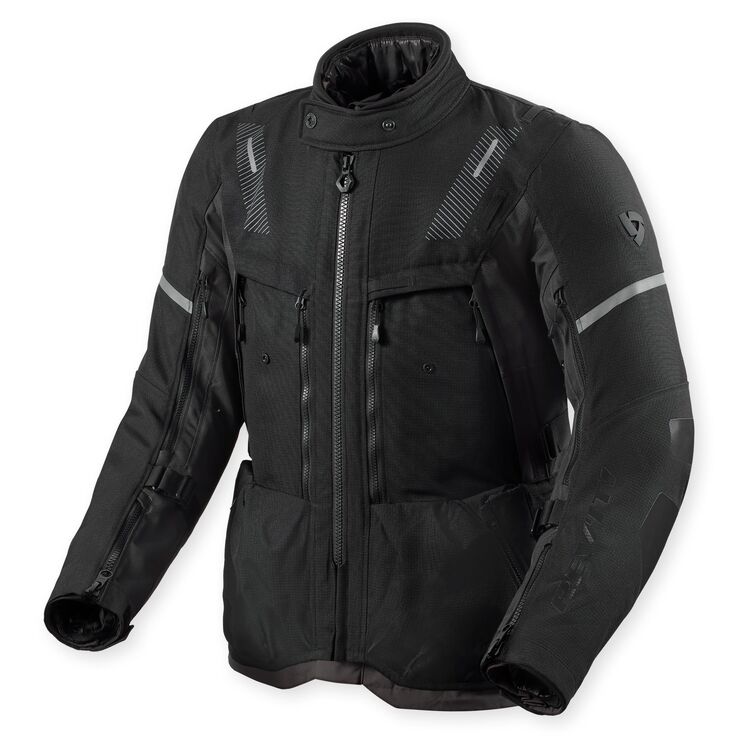
The Sand series has been REV’IT!’s flagship ADV jacket for over a decade, and the Sand 5 H2O is the most refined version of what has always been a genuinely good idea. The concept is a jacket system that travels with you through every season without requiring you to pack a second jacket — which sounds like marketing until you actually understand how the liner system works.
The Hydratex 3L waterproof liner can be worn over the shell (REV’IT!’s recommended approach for maximum membrane performance) or under it. The thermal liner is a separate piece that can be worn on its own as a destination garment. You have three jackets in one package, each of which works as a standalone piece.
The fifth-generation update brought improved ventilation through XL sleeve zippers and expanded chest and back vent panels. The SEEFLEX CE Level 2 armor at the shoulders and elbows is a genuine step up from the Level 1 armor that’s standard in most jackets at this price. AA protective certification means REV’IT! stands behind the abrasion resistance of the shell construction. Connection zippers for pants, hydration pack compatibility, elbow armor that can be repositioned to fit your arm length — the feature list is long because touring riders ask hard questions and the Sand 5 tries to answer all of them.
Coming in at over five Benjamin Franklin bills on the price, this is the most expensive jacket in this guide and it’s not pretending otherwise. The honest case for it: if you tour long distances, ride in varied weather, and want one jacket that handles all of it well, the Sand 5 H2O pays for itself in the jackets you don’t have to buy.
The honest criticism: it runs narrow in the shoulders and chest in the REV’IT! European cut, and the belt buckle system that connects the jacket to compatible pants draws consistent complaints about being cheap relative to the overall quality of the jacket. Neither issue is a dealbreaker, but both are worth knowing. The touring jackets guide covers more options in this category if the Sand 5 isn’t the right fit.
Check it out at Revzilla | Check it out at Amazon
How to Choose the Right Motorcycle Jacket
The first question isn’t about brand or budget — it’s about when and where you ride. If most of your riding happens in summer heat, a mesh or highly ventilated textile jacket is the right starting point, and spending money on waterproofing or insulation is largely wasted.
If you ride year-round or through variable weather, a jacket with a removable waterproof liner is worth the premium. If you do long touring miles and need gear that packs well and handles everything, an ADV jacket like the Sand 5 makes more sense than buying separate summer and winter options.
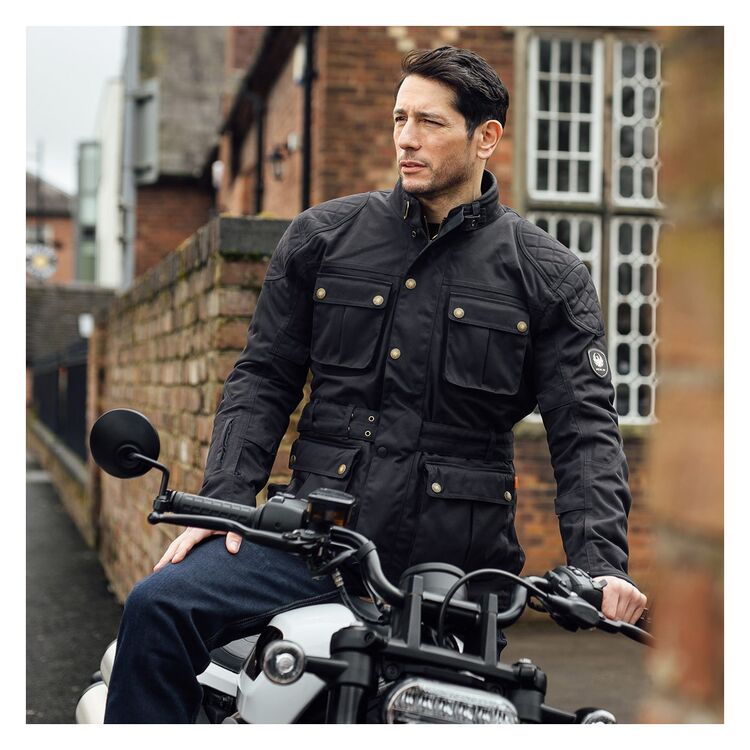
Material is the second consideration, and it’s less complicated than the marketing makes it sound. Leather offers outstanding abrasion resistance — thick, high-quality cowhide slides rather than grabs, which is exactly what you want in a fall. Textile is more versatile, easier to waterproof, and generally more comfortable in a range of temperatures.
The gap between good textile and leather has narrowed significantly — 1000D Cordura with CE-rated armor is not a meaningful protection downgrade from leather for most street riding. The leather jackets guide goes deeper on when leather is the right call.
Armor standards matter more than most buyers realize. CE Level 1 armor meets a minimum impact absorption threshold. CE Level 2 armor absorbs significantly more energy and is the standard recommended by most serious gear manufacturers for riders who want real protection.
Most jackets include Level 1 as standard and either include Level 2 as an upgrade or sell it separately. The back protector is always worth adding — it’s the most vulnerable impact point in a crash and the one most jackets treat as optional. It shouldn’t be.
Fit is the thing nobody talks about enough. A jacket that shifts during a fall — that gaps at the shoulders or rides up at the waist — moves the armor away from the impact point. A well-fitting jacket with average armor outperforms a poorly fitting jacket with excellent armor. The rule of thumb: armor should feel snug against its intended position when you’re in your riding position on the bike, not just standing up straight in a store.
If you’re buying online, measure your chest, shoulders, and sleeve length against the size chart, and cross-reference customer reviews for fit notes — they’re consistently the most useful information on any product page. If you’re pairing a new jacket with a new lid, the intercom guide is worth a read for thoughts on how jacket collar height affects helmet fitment.
Frequently Asked Questions: Motorcycle Jackets
What’s the difference between CE Level 1 and CE Level 2 armor?
Both ratings are tested to European standard EN 13594 for impact protection, but Level 2 absorbs significantly more energy before transmitting force to the body. In practical terms, Level 2 armor provides meaningfully better protection in higher-speed impacts.
Most entry-level and mid-range jackets include Level 1 as standard; Level 2 armor is increasingly common in premium jackets and is always worth upgrading to if your jacket supports it. Adding a CE Level 2 back protector is the single most impactful armor upgrade you can make on any jacket.
Is leather really safer than textile?
High-quality leather offers superior abrasion resistance — thick cowhide or kangaroo leather slides well against pavement, which reduces road rash in a low-side fall. Modern high-denier textiles like 1000D Cordura have narrowed the gap considerably, and a good textile jacket with CE-rated armor is very well-protected for the vast majority of street riding.
Where leather still has a meaningful edge is in pure slide protection at higher speeds, which is why track riders and sport riders tend to prefer it. For street riding in varied weather, textile is often the more practical choice. The leather jackets guide covers this tradeoff in more detail.
Can I wear a motorcycle jacket in hot weather?
Yes, and you should. The instinct to ditch the jacket in summer heat is understandable but genuinely dangerous — the consequences of a fall at any speed are significantly worse without a jacket. Modern mesh and ventilated textile jackets move enough air that many riders find them actually cooler than a t-shirt at highway speeds, because the air movement actively wicks heat away.
The jackets in this guide designed for warm weather — particularly the Alpinestars T-GP Plus and the Eclipse 2 — are built specifically for this use case. The summer jackets guide has more options across a wider price range.
How should a motorcycle jacket fit?
The armor should be snug against its intended position when you’re in your riding position — leaned forward, arms extended, not standing upright in a showroom. The shoulders should feel secure without restricting movement, the elbow armor should sit on the elbow without riding up the forearm, and the jacket should stay tucked and not ride up at the waist. A jacket that fits perfectly standing up but shifts badly on the bike is putting armor in the wrong place when it matters most.
When in doubt between sizes, lean toward the smaller size for a more secure fit — most jackets have adjustment points that can add a little room, but you can’t take up slack in a jacket that’s too large.
Do I need to buy a jacket with a connection zipper for pants?
Not strictly necessary, but worth having if you plan to wear dedicated riding pants. Connection zippers attach the jacket to compatible pants, preventing the jacket from riding up in a fall and keeping the armor positioned correctly across the hip and lower back.
If you’re riding in jeans or non-moto pants, it’s less relevant. If you’re gearing up properly — jacket, pants, boots — it’s one of those small features that makes a real difference in an actual crash. The touring jackets guide covers more on how jacket-pants systems work together.
