
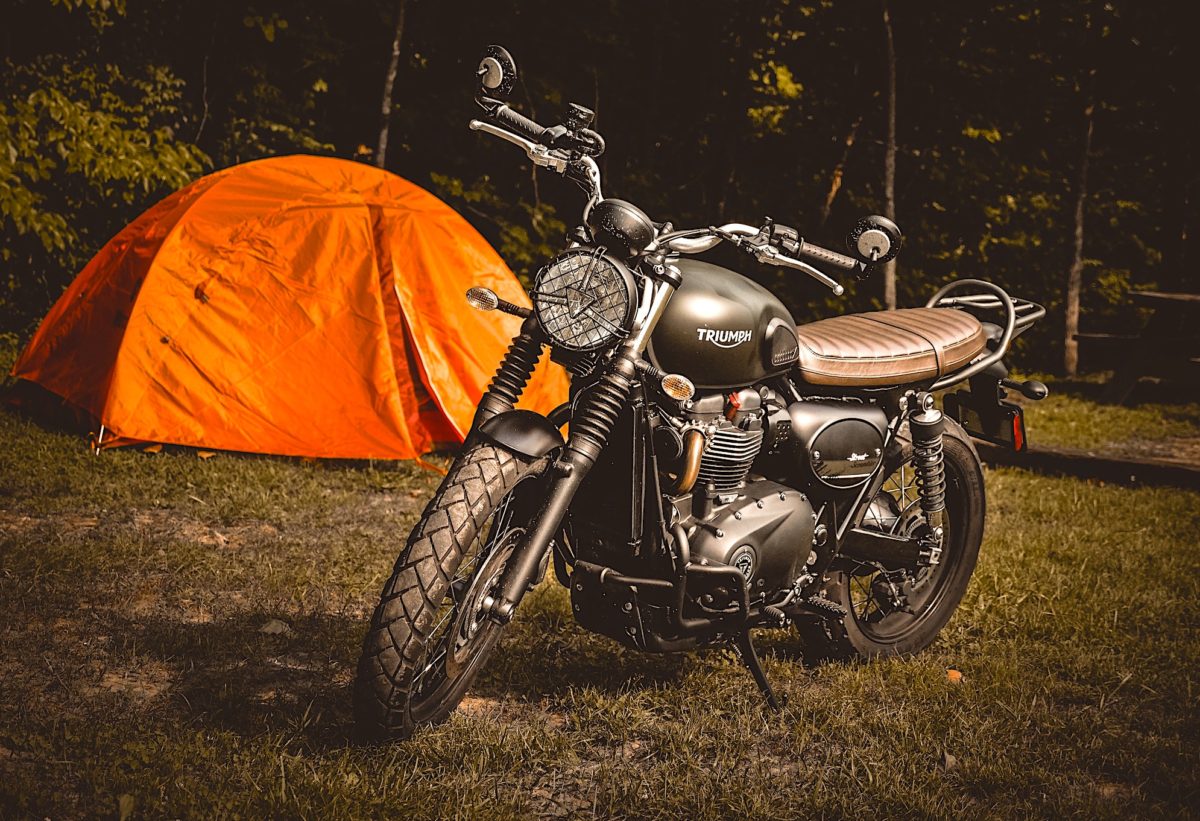
There’s a version of a motorcycle road trip that involves booking hotels in advance, packing light, and knowing where you’re sleeping every night. That’s a perfectly good trip. A lot of people prefer it.
And then there’s motorcycle camping — where you’ve got everything you need strapped to the bike, you’re not locked into any particular destination, and your campsite is wherever you decide to stop.
It’s a different experience. It’s also, for a lot of riders, the one that sticks with them the longest.
What Makes It Different
When you’re hotel-to-hotel, the ride is the point and the destination is the accommodation. When you’re camping, the whole thing opens up. You’re not chasing a check-in time. You’re not trying to make it to a specific town. You can follow a road because it looked interesting and deal with where you end up when you get there.
There’s also something about the simplicity of it. At the end of the day you’ve got your tent, your sleeping bag, maybe a camp stove and something to cook. That’s it. The noise of regular life drops away in a way that even a solo hotel trip doesn’t quite replicate.
A study from the University of Michigan found that time spent in nature — even short amounts — meaningfully reduces cortisol levels and improves mood. Combine that with what we know about riding’s own stress-reducing effects (which we covered in our solo riding and mental health piece) and you’ve got a pretty compelling case for getting out there.
The Gear You Actually Need
The biggest thing that stops riders from trying motorcycle camping is the gear question. It feels complicated. It doesn’t have to be.
The core list is shorter than you think:
A small tent. You want something lightweight and packable — not a car-camping tent that weighs eight pounds. A good ultralight backpacking tent in the 2-3 pound range packs down small enough to strap to the back of almost any bike.
A sleeping bag that compresses. Temperature rating matters — think about the coldest night you might realistically encounter. A compression sleeping bag designed for backpacking will pack down to roughly the size of a football, which is manageable.
Storage that keeps things dry. Waterproof saddlebags are worth the investment if you’re going to do this more than once. Getting caught in rain with gear that isn’t waterproofed is a miserable experience you only need to have once.
A way to make coffee. This is non-negotiable for a lot of riders. A Jetboil or similar compact stove takes up almost no space and makes a significant difference in how the morning starts.
Beyond that, it’s the usual camping basics — layers for sleeping, a headlamp, some basic tools, water. Nothing exotic.
The Packing Puzzle
Figuring out how to fit everything on the bike is half the fun, and also genuinely satisfying once you crack it. Riders who do this regularly talk about the packing process almost like a game — how do I get everything I need into the smallest possible footprint?
The general rule is to keep heavy items low and centered, use every available strap point, and be brutal about what you actually need versus what you’re bringing because it might be useful. It almost never is.
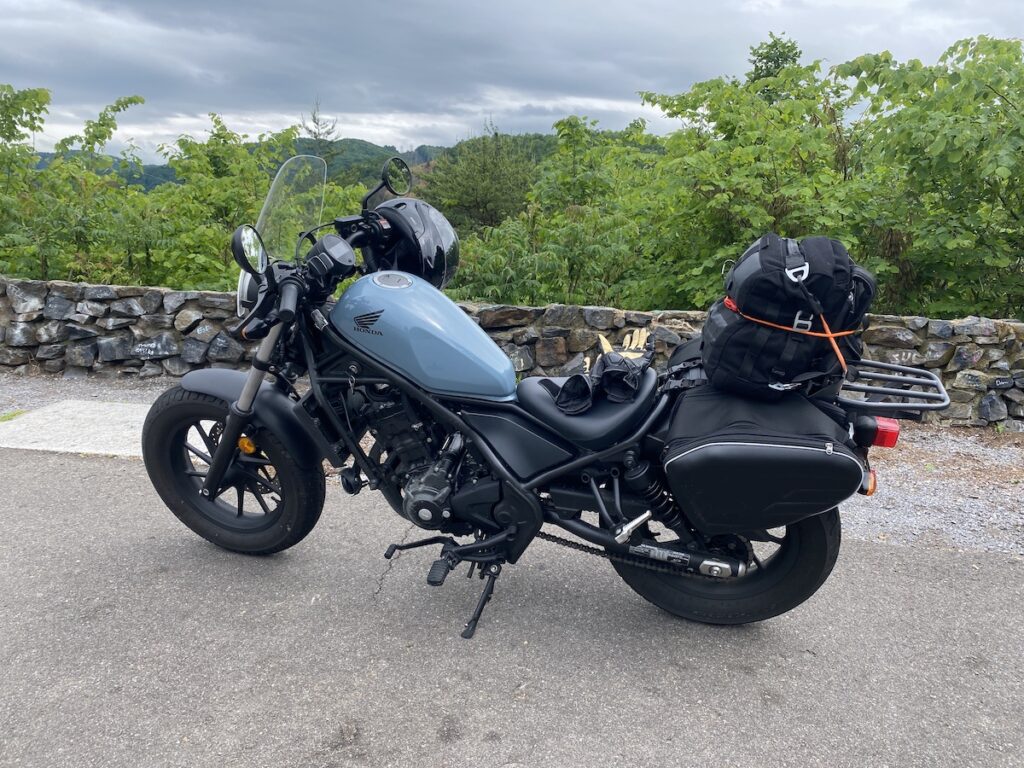
If your bike has luggage options — panniers or saddlebags, a top box, a tail bag — use them. If it doesn’t, a good tail bag and a dry bag strapped on top can cover a lot of ground. Riders on everything from ADV bikes to standard cruisers make motorcycle camping work. It’s more about packing discipline than what you’re riding.
Where to Go
For your first trip, keep it simple. A night or two at a campground within a few hours of home is a better introduction than a week-long expedition. You want to figure out your system — what you packed that you didn’t need, what you wished you had — without being too far from home if something doesn’t work out.
KOA campgrounds and state park campgrounds that accept walk-ins are both good starting points. Apps like The Dyrt or Campendium are useful for finding spots and reading reviews from other riders.
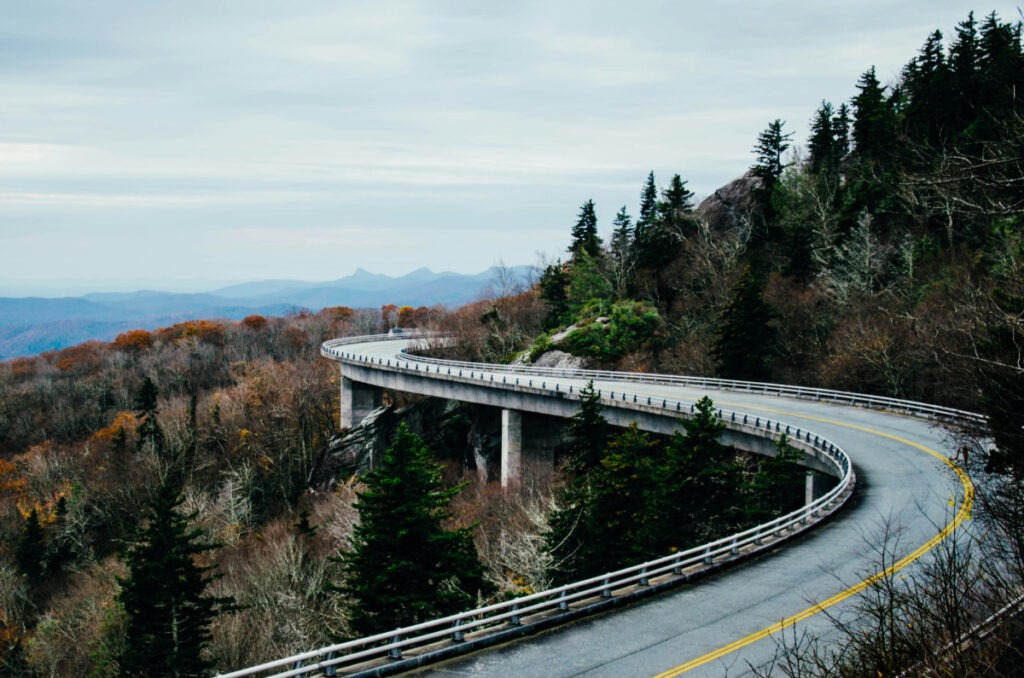
Once you’ve got your kit dialed in and you know how it all fits on the bike, longer trips open up naturally. Some riders end up doing their best miles this way — the Blue Ridge Parkway, the Natchez Trace, the Pacific Coast Highway are all significantly better when you’re camping along the way instead of rushing to a motel.
Just Go Do It
The first motorcycle camping trip is usually the hardest one — not because it’s physically difficult, but because there’s so much uncertainty going in. What if it rains? What if I forget something? What if I don’t sleep well?
All of those things might happen. They probably won’t ruin the trip.
What you’re more likely to remember is the morning coffee at the campsite with no one else around, the way the road felt that first morning after sleeping outside, and the quiet satisfaction of having everything you needed strapped to your bike and nowhere you absolutely had to be.
It’s worth doing at least once. Most riders who try it end up making it a habit.
