
There’s a paradox at the center of motorcycling that takes most riders a while to consciously notice.
You’re moving fast, faster than you move almost anywhere else in daily life. The wind is loud. The environment is rushing past. And yet, somehow, everything slows down. Your thoughts quiet. The mental noise that follows you everywhere else just stops.
It’s what happens when your brain is fully occupied with the present moment and has no bandwidth left for everything else. Riding forces a kind of presence that most people spend a lot of money and effort trying to find in other ways.
And along the way, it teaches some things that are harder to learn sitting still.
You Can’t Rush It
New riders learn this one fast and experienced riders keep relearning it: you should not muscle a motorcycle. The more you tense up and try to force it, the worse it goes. Smooth inputs. Trust the physics.
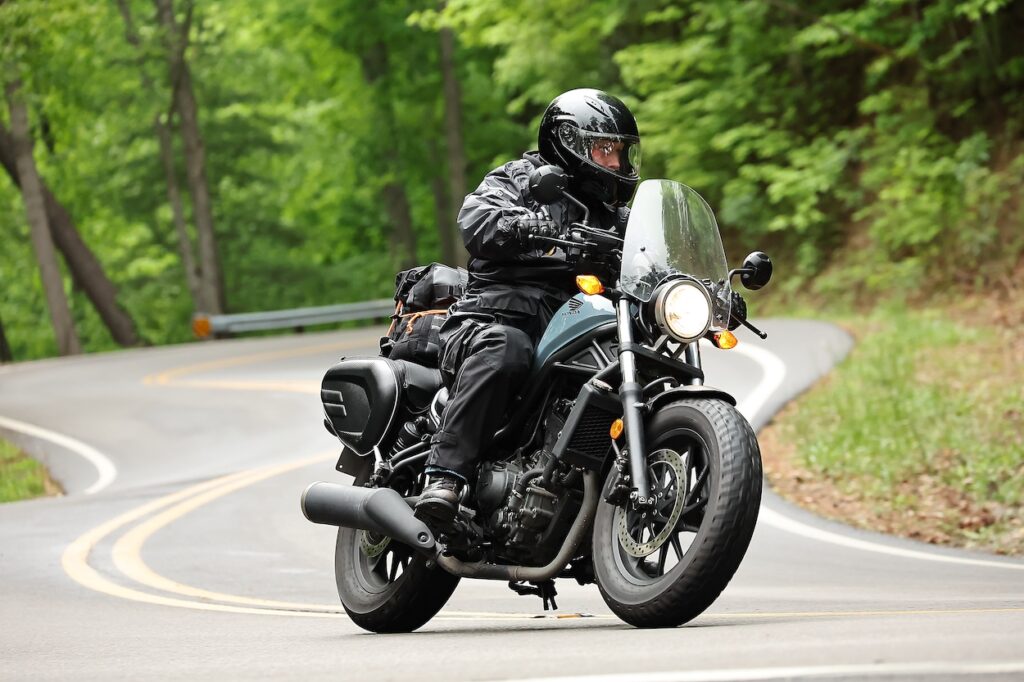
This is not how most people are wired. We’re trained to push harder when something isn’t working. Riding teaches the opposite. It shows that sometimes the correct response to difficulty is to ease off, breathe, and let the situation resolve itself.
Off the bike, that lesson has a way of showing up everywhere once you’ve internalized it. The tense meeting where pushing harder makes things worse. The relationship conversation that needs space, not pressure. The project that needs to sit for a day before the answer becomes obvious.
Attention Is Everything
The Conversation published a piece describing motorcycle riding as one of the more effective real-world applications of mindfulness, not because it’s meditative in the traditional sense, but because it demands the same quality of attention. You’re not doing it halfway. You’re not half-present while thinking about something else. You’re here, or you’re in trouble.
Most of us go through a significant portion of our days running on autopilot. We’re physically in one place and mentally somewhere else entirely — replaying a conversation, worrying about something three weeks away, scrolling through a feed that we’ll have forgotten by the time we put the phone down.
Riding doesn’t allow that. And after a couple of hours in that fully-present state, a lot of riders notice that they come back to the rest of their life a little sharper, a little calmer, a little more capable of actually being where they are.
There’s a reason the solo riding piece struck a chord with so many readers. It’s describing the same phenomenon from a different angle.
The Road Doesn’t Care About Your Schedule
Weather changes. Traffic backs up. Construction closes the route you planned. The bike needs a few extra minutes to warm up on a cold morning.
Riding trains you to hold your plans loosely. You make them, and then you stay flexible, because the variables are real and fighting them is a losing game. The rider who gets rattled every time something doesn’t go exactly as expected is going to have a miserable time. The rider who shrugs and finds a different road is going to have a great one.
That’s a practical attitude one. Control what you can, adapt to what you can’t. It sounds simple. It takes real practice.
Slow Riding Is Actually Hard
Here’s one that surprises a lot of people who haven’t spent time on a bike: slow riding is technically more demanding than fast riding.
At speed, the gyroscopic effect of the wheels helps stabilize the bike. Slow down enough and that stabilizing force disappears. You’re relying entirely on your own balance and throttle control. Parking lot maneuvers, tight U-turns, low-speed figure eights: these are where real skill shows.
The metaphor writes itself. Moving fast feels powerful and in control. Slowing all the way down and doing it well, that takes more.
It Changes What You Notice
Ride the same road in a car and on a motorcycle and you’ll come back having seen completely different things. On a bike, you notice the smell of cut grass and rain coming. You feel the temperature drop as you cross a creek. You catch the hawk on the fence post that you’d have blown past at 60mph without registering.
The sensory engagement of riding has a way of training your attention more broadly. Riders tend to notice more. Not because their eyes are better, but because they’ve practiced paying attention.
That carries over. A lot of riders describe becoming more observant in general. They’re more tuned in to the texture of a conversation, the mood of a room, the details of a place. Riding sharpens something.
The Lesson Underneath All of It
Most of what motorcycles teach comes down to one thing: presence is the point.
The ride that goes well is the one where you’re actually on it. You can’t be somewhere else in your head. You can’t be already thinking about the destination. You can’t be running through your mental to-do list while the road passes underneath you.
That’s the thing you come back for, whether you know it or not. The speed, the freedom, the community. All those things are real, but underneath all of it is the experience of being fully, completely here.
For those who want to lean further into that headspace on the road, pairing a good ride with the right motorcycle lifestyle reads is worth doing. Whether you read Zen and the Art of Motorcycle Maintenance or something else, Some of the best writing about motorcycles is really writing about attention, freedom, and what it means to show up for your own life.
