
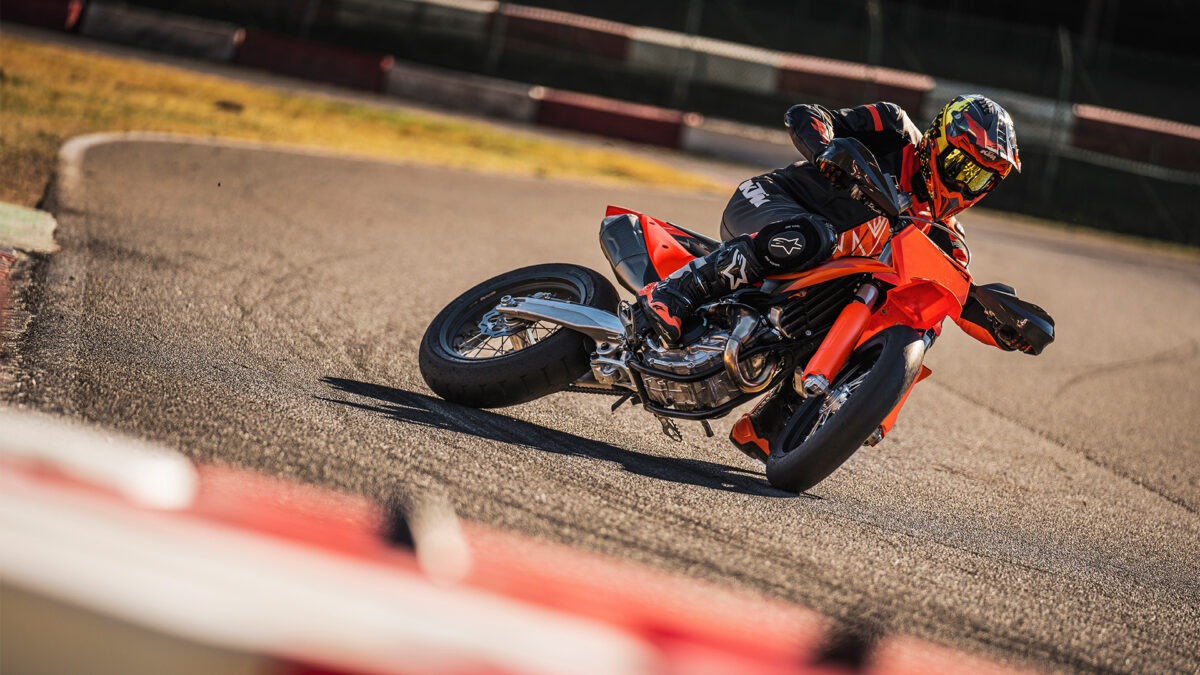
For 2027, KTM is doing something unusual with its 450 SMR competition supermoto bike. The company is backing it with a four-year manufacturer warranty.
The engine and chassis carry over from last year. But the warranty move tells a bigger story about KTM trying to repair buyer confidence after a difficult stretch.
A Warranty Strategy Born From Hard Times
KTM’s parent company, Pierer Mobility, spent the last year navigating financial restructuring, unsold inventory, and persistent questions about reliability.
In 2025, the Austrian brand extended a four-year manufacturer warranty to its street-legal models, covering bikes that were sitting on dealer floors. That move was aimed squarely at nervous buyers.
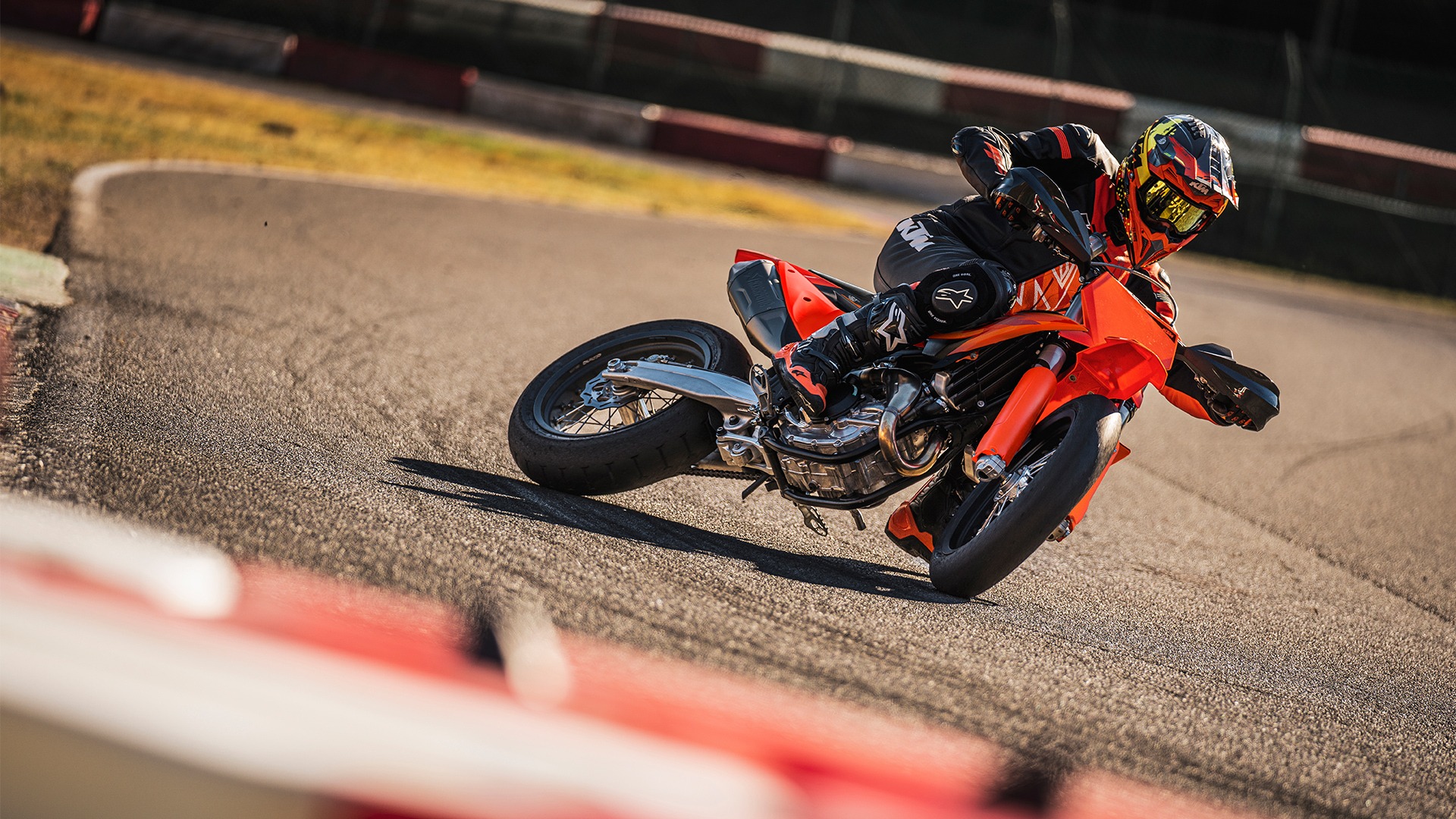
Now the same coverage is reaching competition models like the 450 SMR.
European buyers get four years of warranty on a bike designed for track days and supermoto racing. American buyers are left out for now.
Whether a four-year warranty makes sense on a competition bike that gets ridden hard is a fair question. KTM seems to be betting that peace of mind matters more than the risk of claims.
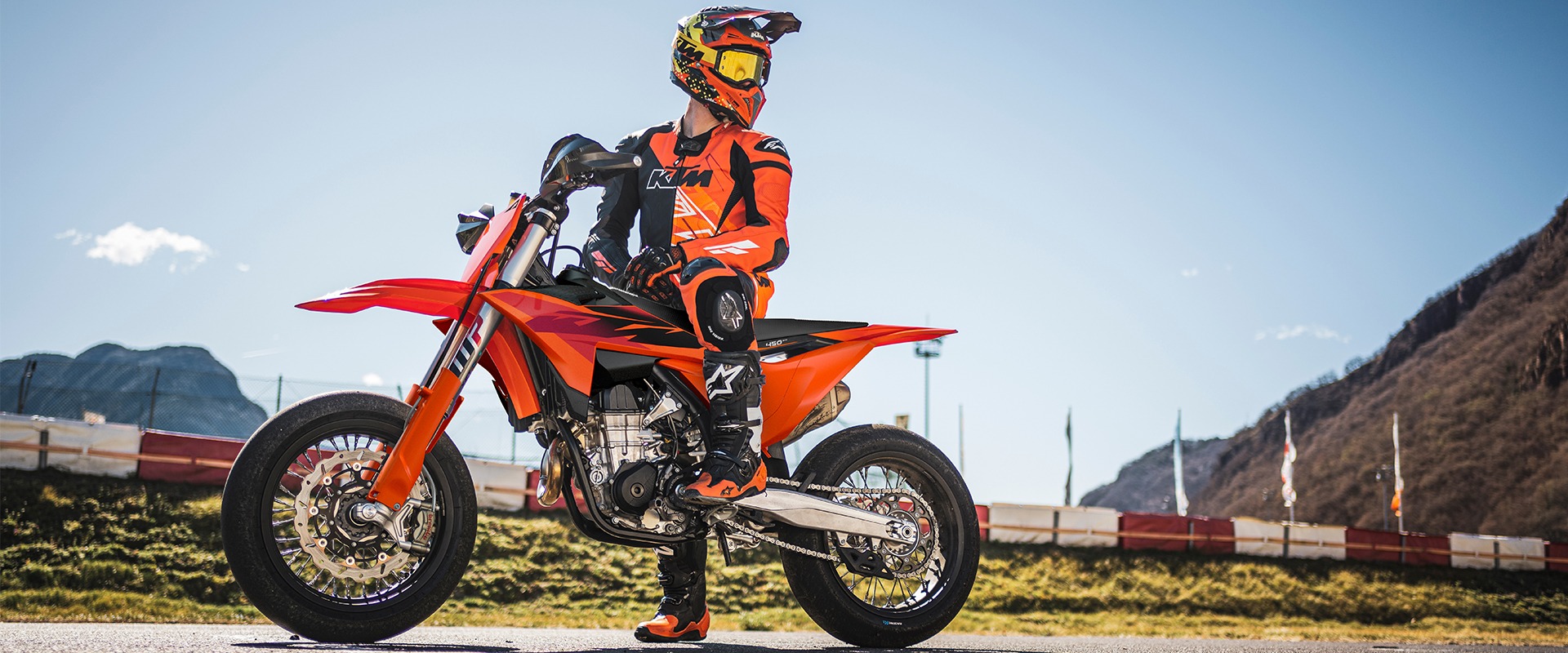
The 450 SMR itself remains a serious machine. A 450cc SOHC single-cylinder engine powers it, paired with Brembo brakes, a Suter slipper clutch, and fully adjustable WP XACT suspension.
Lukas Höllbacher rode the platform to the 2025 FIM Supermoto World Championship title in the S1GP class. The 2027 model adds black handguards, wheels, exhaust, and seat, but the mechanicals stay unchanged from 2026. Pricing sits at $12,499 in the United States and £11,449 in the UK.
What This Says About KTM’s Direction
When a company wraps a track-only bike in a street-style warranty, it is signaling something about confidence. KTM wants buyers to know its bikes are built to last.
The catch is that the four-year Premium Manufacturer’s Warranty applies only to EU customers. If you are buying a 450 SMR in the United States, you are on your own for now.
KTM’s broader warranty push, which also covered GasGas and Husqvarna models during the recall period, feels like a direct response to a rough couple of years. Extending that coverage to North America would be the logical next step.
