
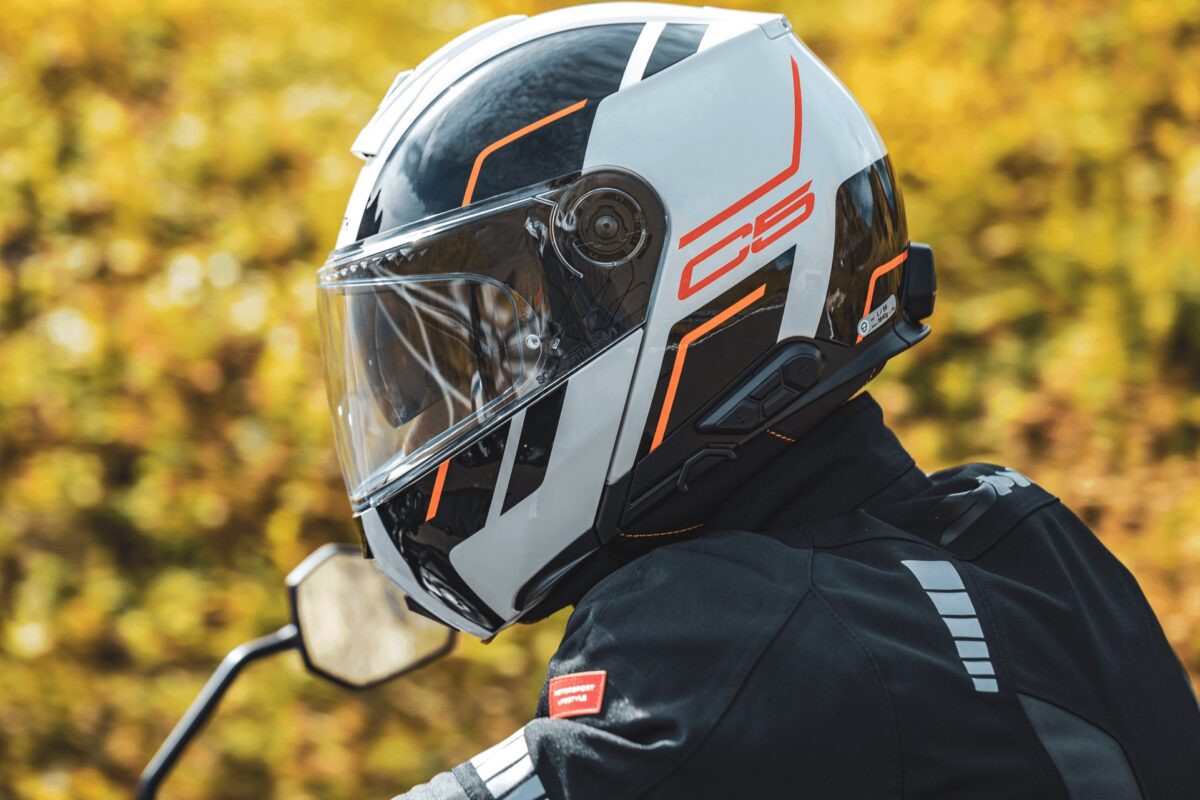
The gap between a $150 helmet and a $500 helmet is real. But it’s not always where people assume it is.
Understanding what you’re actually paying for makes the decision a lot more straightforward. You need to know for sure what makes a motorcycle helmet worth the money so you don’t waste your hard-earned dollars. Here’s your guide.
Certifications Are the Baseline, Not the Differentiator
Every helmet sold legally in the US has to carry a DOT certification. That’s the floor. The problem is that DOT certification is self-certified by the manufacturer, which means the actual testing rigor varies.
SNELL certification is independently tested and generally considered more demanding. ECE 22.06, the current European standard, is arguably the most rigorous widely available certification right now because it tests for rotational impact in addition to direct impact, which is how a significant percentage of real-world crashes actually affect the brain.
A budget helmet with only DOT certification has cleared the minimum bar. A helmet with ECE 22.06 or SNELL certification has cleared a higher one. That’s one thing you’re paying for as the price goes up.
Shell Material and Construction
Budget helmets use thermoplastic shells. They work, but they’re heavier and they manage impact energy less efficiently than composite materials.
Mid-range and premium helmets use fiberglass composite, carbon fiber, or a combination. The practical differences: lighter weight, which matters a lot over a long day of riding; better impact energy management, which matters in a crash; and in many cases a more precise shell geometry that allows for better fit.
Weight is underestimated as a comfort factor. A helmet that’s a few hundred grams lighter feels meaningfully different after three hours in the saddle, and neck fatigue from a heavy helmet is a real thing on long rides.
Ventilation and Internal Comfort
Cheaper helmets have ventilation systems that exist mostly as design features. Higher-end helmets have ventilation systems that actually work: channeled airflow that pulls heat away from the head, adjustable vents that respond to conditions, and liner materials that wick moisture rather than absorb it.
The interior liner quality also determines fit precision. Better helmets use multi-density EPS foam and shaped liner padding that conforms to different head shapes more accurately. This affects both comfort and safety, since a helmet that fits correctly transfers impact energy more predictably than one that’s loose or uneven.
Noise Levels
Helmet noise is not just a comfort issue. Prolonged exposure to wind noise at highway speeds causes real hearing damage over time, and it increases cognitive fatigue on long rides. Premium helmets invest in aerodynamic shell geometry and internal liner design specifically to reduce buffeting and turbulence.
This is one of the clearest places where the price gap is justified for anyone doing regular highway miles. A quiet helmet is less tiring. That’s not a luxury, it’s a practical advantage.
The Middle of the Market Is Often the Sweet Spot
You do not need to spend $700 to get a genuinely good helmet. The $300 to $500 range from reputable brands is where the real safety and comfort gains are concentrated.
A Bell Qualifier DLX MIPS or Scorpion EXO in this range gets you solid certifications, composite or polycarbonate shell, real ventilation, and a quality liner. A Shoei RF-1400 at the higher end adds the premium shell construction and noise attenuation that daily highway riders notice.
Beyond about $700, you’re largely paying for premium materials, brand prestige, and incremental refinements. The safety fundamentals plateau well before the price does.
The Rule Worth Keeping
Buy the best helmet you can wear comfortably for a full day. Fit is the single most important variable and it costs nothing, just time trying different shapes on your specific head. A $400 helmet that fits perfectly outperforms a $600 helmet that doesn’t every time.
You might also enjoy:
For how the helmet fits into a complete daily riding setup, the daily riding kit piece covers the rest of the gear system around it.
