
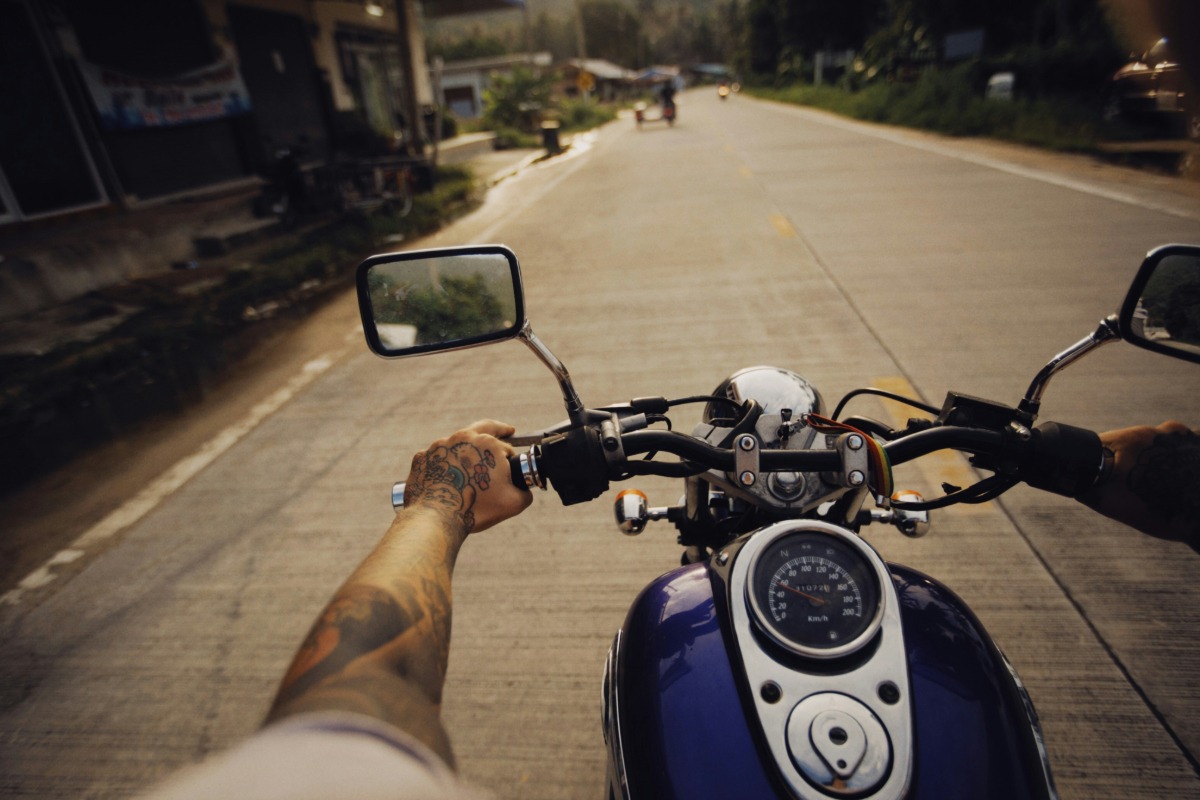
You’re rolling down a two-lane somewhere, and a rider comes the other way. Before they pass, one hand drops low — fingers out, maybe a two-finger point toward the road. You return it almost without thinking.
The motorcycle wave. Every rider knows it. Most do it automatically after a while. But if you’ve never stopped to think about where it came from or why it’s stuck around for over a century, it’s actually a pretty interesting piece of riding culture.
Where It Started
The most widely cited origin story traces the wave back to 1904, when Arthur Davidson and William Harley — yes, those guys — supposedly passed each other on the road and exchanged a wave of acknowledgment. Two guys on motorcycles, recognizing each other simply because there were so few motorcycles on the road at the time that the sight of another one was worth noting.
Whether that specific story is apocryphal or not, the underlying logic is solid: early motorcycling was a genuinely uncommon thing, and seeing another rider felt like running into a fellow member of a very small club. The wave was the natural response.
Over a century later, the roads are more crowded and motorcycles are everywhere — but the wave persists. That says something.
What It Actually Means
Ask a group of riders why they wave and you’ll get a range of answers. Some say it’s about mutual respect. Some say it’s acknowledgment that you both chose to be out here on two wheels instead of locked in a car. Some just say it’s what you do — they don’t overthink it.
But there’s a deeper layer to it too. Riding carries real risk, and every rider on the road knows that. The wave is a small, quiet way of saying: I see you. Ride safe. Get home.
That’s not nothing. In a world where most drivers don’t notice each other at all, there’s something genuinely human about two strangers acknowledging each other just because they share a common experience.
The Unwritten Rules
Like anything in riding culture, the wave comes with its own informal etiquette — and opinions vary widely depending on who you ask.
The classic form is the low wave: left hand dropped below the handlebars, two fingers extended toward the road. Some riders do a full hand wave. Some do a nod. Some do a slight head tip that barely registers to anyone else but is absolutely a wave to another rider.
There’s also the ongoing debate about who waves to whom. Some riders only wave to other bikes of the same type — cruiser to cruiser, ADV to ADV. Others wave at anyone on two wheels. A few don’t wave at scooters. (A lot of people have opinions about this.)
The honest answer is that there are no real rules, and anyone who tells you otherwise is taking it too seriously. The point isn’t the specific gesture — it’s the intention behind it.
When You Don’t Get One Back
Every rider has had the experience of throwing a wave at someone who doesn’t return it. Maybe they were focused on traffic. Maybe they were newer and hadn’t picked up the habit yet. Maybe they just weren’t paying attention.
It’s mildly annoying in the way that only small social snubs can be, which is to say — not very annoying at all once you’ve thought about it for two seconds. New riders often don’t know about the wave until someone tells them, and that’s fine. You figure it out.
The first time a seasoned rider explains the wave to someone who just got their license is actually kind of a nice moment. It’s one of the ways the culture passes itself along.
It’s Still Worth Doing
There’s a version of this conversation where someone argues the wave has lost its meaning now that motorcycles are common, or that it’s just habit without substance anymore. I don’t buy it.
The shared experience of riding — the exposure to weather, the heightened attention, the choice to be out there on two wheels — still means something. It’s still a different relationship with the road than driving. And the wave is still a small, honest acknowledgment of that.
For more on the culture side of riding, my mechanical watches piece gets at the same idea from a different angle — the way riding connects people who appreciate things that are built with purpose.
Keep waving. It matters more than it looks like it does.

I usually wave, unless traffic or something is taking my attention. Yes I wave to everyone, scooters included, even dirt bikes. The one question I have though: What if you jeet a bunch of bikes. Say six to twelve GoldWings travelling as a group. Waving to all of them means my hand is off the bar for a LONG time. But waving only yo the lead feels like a snub. Thoughts?
At the very least, I wave to the leader of the pack, but if I’m being honest, I usually wave to the first guy I see (or try to) and then wave to the final guy in the group.