

Getting the right helmet starts with one measurement. Wrap a flexible tape measure around your head approximately one inch above your eyebrows, keep it level across your forehead and around the widest point at the back of your skull, and write down the number in centimeters. That number — your head circumference — is the foundation of every sizing decision you’ll make when buying a motorcycle helmet.
It sounds simple, and the measurement itself is. The part that trips most riders up comes after: understanding how to read size charts across different brands, how head shape affects fit independently of circumference, and how to verify that a helmet actually fits correctly before money changes hands. This guide covers all of it, step by step.
What You Need Before You Start
The tools are minimal. A flexible tape measure, the kind used for sewing or tailoring, is ideal. If you don’t have one, a piece of non-stretchy string and a ruler or yardstick work just as well. You’ll also want a mirror so you can see what you’re doing without a second person, and a pen to write down your measurement. That’s it.
One thing worth noting before you measure: wear your hair the way you’ll actually wear it when riding. If you pull your hair back in a ponytail, do that. If you wear a balaclava under your helmet in cold weather, account for that thickness too. The measurement you want is the one that reflects your real-world riding setup, not an idealized version of it.
Step-by-Step: How to Measure Your Head for a Motorcycle Helmet

Step 1: Stand in Front of a Mirror
You need to see what you’re doing. Stand close enough to a mirror that you can watch the tape measure position as you work.
The most common measurement mistake, holding the tape too high or letting it tilt, is easy to catch if you can see it happening in real time. If you have someone who can help, even better, but it’s not necessary.
Step 2: Find the Right Starting Point
Place the tape measure against your forehead approximately one inch, about two and a half centimeters, above your eyebrows.
This is the point where a motorcycle helmet’s front edge will rest when properly positioned, and it’s typically the widest horizontal circumference of your skull. Not higher on your forehead, not lower toward your brow — right at that one-inch mark.
From there, the tape should run level across your forehead, back along the sides of your head just above your ears, and around the widest part of the back of your skull, which is the occipital bone, the small bony ridge that most people can feel at the base of the back of their head. The tape follows a level horizontal path the entire way around.
Step 3: Keep the Tape Snug but Not Tight
The tape measure should rest firmly against your head — not so loose that it dips between measurement points, and not so tight that it compresses your scalp or hair.
Think of how a well-fitting hat sits. That’s the pressure you’re looking for. If the tape is too tight, your measurement will run small and you’ll end up with a helmet that’s too small after break-in. If it’s too loose, you’ll measure large and end up with a helmet that’s already loose before the padding compresses.
Step 4: Read and Record the Measurement
Read the number where the tape meets itself at the front of your head. Write it down in both inches and centimeters. Most helmet size charts use centimeters, but some brands also provide inch equivalents. Having both on hand means you won’t have to convert on the fly.
Step 5: Measure Two or Three Times
Take the measurement again without looking at your first number, then compare. A half-centimeter difference between measurements is completely normal and nothing to worry about.
If you’re getting more variation than that, check your tape position. Most inconsistency comes from the tape tilting up or down slightly between measurements, or from inconsistent tension. Use the larger of any consistent measurements when in doubt, since you can always adjust for a slightly snug fit but you can’t fix a helmet that’s too large.
Step 6: Determine Your Head Shape
Head circumference tells you what size to start with. Head shape tells you which brands and models will actually fit comfortably. This step is just as important as the measurement, and most guides gloss over it.
To determine your head shape, you need two additional measurements: front-to-back and side-to-side. For the front-to-back measurement, place the tape at the center of your forehead and measure straight back to the widest point at the back of your skull. For side-to-side, measure across the widest point of your head from ear to ear. Compare the two numbers:
If your head is noticeably longer front-to-back than it is wide, you have a long oval head shape. If it’s roughly equal in all directions, you have a round oval shape. If it falls somewhere in between that’s intermediate oval, which is the most common head shape and what most helmets are built around.
Getting the shape wrong is what produces pressure points — that tight spot on your temples or forehead that starts as mild discomfort and turns into a headache on a long ride. A helmet that’s the right circumference but wrong shape will never fit correctly. The site’s guide to helmets for round heads and the guide to helmets for big heads go deeper on how to match head shape to specific brands and models.
How to Read a Motorcycle Helmet Size Chart
With your circumference measurement and head shape identified, the next step is matching that number to an actual helmet size. Here’s where many riders make a critical mistake: they use a generic sizing chart rather than the specific chart for the brand they’re buying.
Helmet sizing is not standardized across brands. A medium in Shoei is not the same as a medium in HJC, which is not the same as a medium in Arai. The same rider who wears a size L in one brand may need an XL in another and an M in a third. The only reliable reference is the size chart published by the specific manufacturer for the specific helmet model you’re considering, because sizing can also vary between models within the same brand.
Here is a general reference chart to give you a starting point, but treat it as an orientation tool, not a purchase guide:
| Head Circumference (cm) | Head Circumference (inches) | General Size |
|---|---|---|
| 53–54 | 20¾–21¼ | XS |
| 55–56 | 21⅝–22 | S |
| 57–58 | 22⅜–22¾ | M |
| 59–60 | 23¼–23⅝ | L |
| 61–62 | 24–24⅜ | XL |
| 63–64 | 24¾–25¼ | XXL |
| 65–66 | 25⅝–26 | 3XL |
Always go to the brand’s website or the product page on RevZilla or the manufacturer’s site to get the actual chart for your specific helmet.
When your measurement falls right on the line between two sizes, start with the smaller size. More on why in the section below.
What to Do if You’re Between Sizes
Size down. This is consistent advice from every major helmet manufacturer and fitting specialist, and the reasoning is straightforward: new helmet padding compresses over time.
Most manufacturers estimate that the EPS liner and cheek pads will break in over approximately 15 to 20 hours of riding. A helmet that starts snug will become comfortable. A helmet that starts slightly loose will become loose enough to move during a fall, which defeats the entire point of wearing one.
The exception is pressure points. A helmet that is snug is normal. A helmet that has specific spots that hurt, a point of pain on the forehead, a sharp pinch at the temples, within the first twenty minutes is a different problem.
That’s usually a head shape mismatch rather than a sizing issue, and sizing up won’t fix it. A helmet that’s too big but has no pressure points is still the wrong choice. What you’re looking for is even, all-around snugness with no concentrated hot spots.
How to Verify a Helmet Fits Correctly

Measurement gets you to the right starting point. These tests confirm you’re actually there.
The Cheek Push Test
With the helmet on and chin strap fastened, place your fingers on your cheeks inside the helmet.
You should feel the cheek pads pressing firmly against your face. If you can easily fit more than one finger between your cheek and the pad, the helmet is too large.
The Roll-Off Test
Fasten the chin strap snugly. Grab the back of the helmet with both hands and push forward and downward.
A properly fitting helmet should not roll off over your forehead. If it does, it’s too large and would fail the same test in a crash. This is the single most important fit check you can do.
The Shake Test
With the strap fastened, shake your head firmly side to side and up and down.
Your skin should move with the helmet, and you’ll feel it pulling slightly on your scalp. The helmet itself should not shift independently of your head. Any visible movement between your head and the helmet shell means it’s too large.
The Twenty-Minute Test
If you’re buying in person, wear the helmet for at least twenty minutes before deciding. Pressure points often don’t announce themselves immediately. They develop over time.
Walk around the shop, move your head in riding positions, and pay attention to anything that starts as mild discomfort. New helmet snugness is normal. New helmet pain is not and won’t get better with break-in.
Special Situations: Online Buying, Hair, and Accessories
If you’re buying online without the ability to try on, your measurement accuracy matters even more. Beyond the sizing mechanics above, customer reviews on fit are your best additional resource, specifically reviews from riders who mention their head circumference and shape alongside their size choice.
RevZilla product pages consistently include this kind of customer fit feedback and it’s more useful than almost any other buying signal for online helmet purchases.
Hair adds meaningful volume. Thick, curly hair measured in its natural state can add a centimeter or more to your effective head circumference compared to the same hair pulled back tight.
Measure with your hair as you’ll actually wear it. If you ride with hair up, measure with it up. If you wear a thin balaclava, measure with it on.
Glasses wearers need to account for temple clearance. Most helmets have glasses-friendly channels in the cheek pads, but the fit of the glasses against the temples can create pressure points in helmets that might otherwise fit correctly. Some brands call this out explicitly in their fit notes. It’s worth noting in your size comparison research if you ride with glasses.
Head Shape and Brand Fit Guide
Once you know your head shape, this general brand alignment gives you a useful starting point for narrowing which helmets to try first. This isn’t a rigid rule, individual models within each brand vary, but it reflects the broad consensus across rider communities and fitting guides:
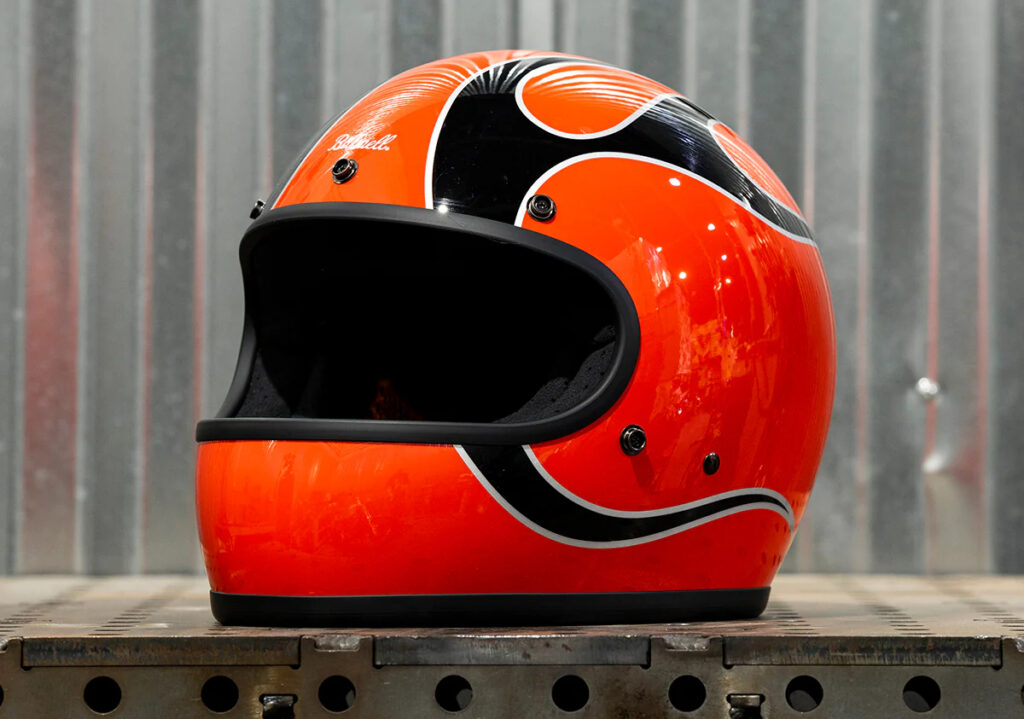
Round oval heads: Arai builds most of their helmets specifically for round oval heads, including the RX-7V and the Corsair-X. Biltwell helmets are also consistently round-oval friendly. Bell’s Qualifier and Custom 500 lines tend to run round oval as well.
Intermediate oval heads: This is the most common shape and the broadest category. Shoei, HJC, AGV, Schuberth, Icon, and most mainstream brands default to intermediate oval. If you fall in this category, you have the widest selection.
Long oval heads: Arai’s Signet-X is explicitly designed for long oval heads. Some Shark and Nolan models also accommodate this shape well. This is the shape most prone to pressure points in standard helmets, and getting it right matters more than for the other two categories.
The best full-face helmets guide and best modular helmets guide both include fit notes for major brands that are useful when cross-referencing your head shape against specific models.
Frequently Asked Questions
How do I measure my head for a motorcycle helmet?
Wrap a flexible tape measure around your head approximately one inch above your eyebrows, keeping it level all the way around your skull. Read the number where the tape meets itself at your forehead and record it in centimeters. Take the measurement two or three times to confirm consistency, then compare it against the specific size chart for the helmet brand and model you’re considering — not a generic chart.
What size helmet do I need if my head measures 57cm?
A 57cm head circumference puts most riders at a size Medium in most major brands, like Shoei, HJC, Arai, and AGV all place 57–58cm in their Medium range. But this varies by model, and the only reliable reference is the specific size chart for the helmet you’re buying. Never assume your size transfers across brands without checking.
Should I size up or down when between helmet sizes?
Size down. Helmet padding breaks in and compresses over 15–20 hours of riding. A helmet that starts snug will loosen slightly and conform to your head. A helmet that starts loose will only get looser.
The exception is genuine pressure points. If a specific spot hurts within twenty minutes, that’s usually a head shape mismatch rather than a sizing issue, and needs to be resolved by trying a different model, not a different size.
What is an intermediate oval head shape?
Intermediate oval means your head is slightly longer front-to-back than it is wide side-to-side. It’s the most common head shape and the one most motorcycle helmets are built around.
If a helmet manufacturer doesn’t specify its shell shape, it’s almost always intermediate oval. You can determine your own head shape by measuring front-to-back and side-to-side and comparing the two numbers.
Can I use a piece of string instead of a tape measure?
Yes. Wrap a piece of non-stretchy string or thin shoelace around your head using exactly the same technique, one inch above the eyebrows, level all the way around.
Pinch where the string meets itself, lay it out straight against a ruler or yardstick, and read the measurement. The result is just as accurate as a tape measure.
Does hair affect motorcycle helmet sizing?
Yes, and more than most riders expect. Thick or curly hair worn naturally can add a centimeter or more to your effective head circumference compared to the same hair pulled back tight.
Always measure your head with your hair in the configuration you’ll actually ride in. If you wear your hair in a ponytail, measure with it up. If you use a thin balaclava in cold weather, measure with it on.
How do I know if my helmet fits correctly?
A properly fitting helmet feels snug all the way around with no specific pressure points. The cheek pads press firmly against your cheeks. With the chin strap fastened, you cannot roll the helmet off your forehead by pushing from the back, this is the most important test.
When you shake your head, the helmet moves with your head rather than shifting independently on it. New helmets feel tight initially; this is normal and resolves over the break-in period. Actual pain is not normal and won’t improve with wear.
How often should I remeasure my head?
Your head circumference doesn’t change meaningfully over time in adults, so you don’t need to remeasure frequently.
However, if it’s been several years since you measured, or if you’re buying from a new brand you haven’t worn before, taking a fresh measurement takes two minutes and removes any guesswork about whether your remembered size is accurate. It’s also worth remeasuring if your hairstyle has changed significantly since your last helmet purchase.
