

Quick Answer: The only truly 100% American-made motorcycle helmet is the Kirsh CHM-1, assembled by veterans in the USA with a patented fluid displacement liner. Super Seer helmets are handcrafted in Evergreen, Colorado from US-sourced materials. Simpson has a US manufacturing facility in Texas but some products may be made overseas.
For the discerning rider, the “Made in USA” label on a motorcycle helmet is more than a geographic claim; it’s a statement of values. In a global market dominated by international giants, a few specialized American companies have cultivated a premium niche by focusing on domestic craftsmanship, innovative technology, and unique brand identity.
This article provides a comprehensive look at the key players in this space, offering a detailed analysis of their products, manufacturing philosophies, and the unique value they offer to riders. Last updated: 2026.
The research identifies three prominent domestic players: Kirsh Helmets, Super Seer, and Simpson Performance Products. Each of these companies has carved out a distinct position in the market—one through technological innovation, another through a legacy of handcrafted quality, and a third through an iconic, aggressive style.
By examining these brands and their offerings, we aim to provide a nuanced understanding of the American helmet landscape, moving beyond a simple list to a transparent and informative guide for the patriotic and quality-conscious consumer.
Market Dynamics and the American Rider
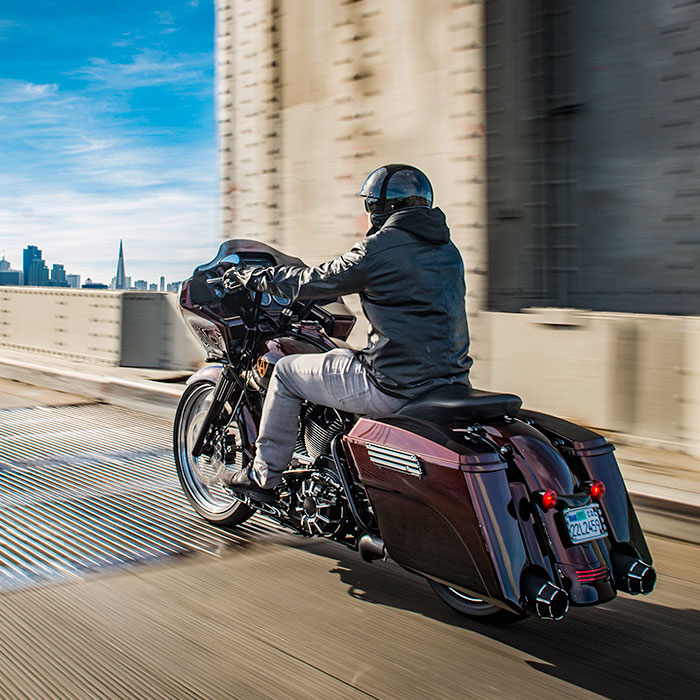
The landscape of the motorcycle helmet market in the United States is shaped by a unique blend of rider demographics, regulatory history, and consumer preferences.
The typical American rider is often part of a core demographic of men and women aged 35 to 55. This audience frequently values products that represent heritage, proven performance, and quality, which aligns perfectly with the brand narratives of companies that emphasize their long-standing domestic production and craftsmanship.
However, this market also faces significant challenges. Many riders cite discomfort—including heat, a feeling of suffocation, and neck pain from heavy helmets—as a primary reason for not wearing a helmet. This discomfort-safety trade-off is a critical restraint on market growth.
American manufacturers have directly addressed these pain points through innovation. For instance, Kirsh Helmets created a patented fluid displacement liner to improve cooling and comfort , while Super Seer designs its helmets for the “long and oval” shape of American heads to eliminate pressure points.
Another notable aesthetic concern in the half-helmet market is the “no mushroom head” look, a consumer desire for a low-profile helmet that sits close to the head. Companies like Kirsh have explicitly built their brand around solving this problem with sleek, low-profile designs.
The fragmented nature of state-by-state helmet laws in the U.S. also means that purchasing decisions are often driven by personal preference, making comfort, style, and weight paramount.
Kirsh Helmets: The Innovator of Fluid Technology
Kirsh Helmets positions itself as an industry innovator with a mission to create a more effective helmet. The company’s founder, Jason Kirshon, spent a decade on research and development to create a product that is “100% America-made” and, as the company claims, “the only helmet that is entirely produced in America”. The company also notes that its helmets are assembled by veterans and disabled workers.
The core of the Kirsh brand is its patented Fluid Displacement Liner™. The company’s goal is to replace traditional foam with this silicone-based technology, which is designed to be more effective at reducing head injuries and rotational acceleration during a crash.
This technology provides tangible benefits for the rider, including a “relaxed fit,” cooling properties that pull heat away from the head, and a liner that is easy to clean and does not retain perspiration odors. The company also claims its hard shell does not shatter on impact.
Kirsh’s flagship product is the CHM-1 half-shell helmet, which is DOT-approved and specifically designed to be low-profile, eliminating the “mushroom head” look. The helmet’s aerodynamic shape is engineered to prevent wind-drag and buffeting, ensuring a stable and smooth ride.
Here are 10 distinct products from the Kirsh CHM-1 lineup:
- Matte Black CHM-1: A standard color option.
- Gloss Black CHM-1: Features an automotive-grade, UV-stabilized paint finish.
- Metallic Silver CHM-1: A standard color option.
- American Pride CHM-1: One of the company’s best-selling special designs, featuring an American flag motif.
- Battle Worn CHM-1: A special design with a distressed look.
- Battle Worn CHM-1 (W): A variation of the Battle Worn design.
- Freyja CHM-1: A special design.
Super Seer Helmets: The Legacy of Handcrafted Performance

Super Seer Helmets is a legacy brand with a proud history of domestic manufacturing. Since 1978, every Seer helmet has been handcrafted at the company’s factory in Evergreen, Colorado, using raw materials sourced from the United States.
The brand is renowned as a trusted supplier of helmets for law enforcement agencies across North America. The same professional-grade quality is available for civilian riders, and the helmets are specifically designed to fit the “long and oval” shape of American heads, a feature that eliminates pressure points and ensures a custom fit.
Super Seer offers a range of half-helmets, categorized by shell material. The S1600 series is made with a fiberglass composite outer shell, while the S2100 series uses a lightweight carbon fiber outer shell, reducing the weight from approximately 2.6 lbs to 2.0 lbs for a medium-sized helmet. The company’s custom shop allows for extensive personalization, including custom paint, different trims, and color matching for brands like Harley-Davidson.
Here are the four primary models in their lineup:
- S1602: A fiberglass model with an open ear harness and a 3-snap removable visor.
- S1608: A fiberglass beanie helmet with a closed-ear harness as standard and a non-removable patent leather visor.
- S2102: A carbon fiber model with an open ear harness and a 3-snap removable visor.
- S2108: A carbon fiber helmet with a closed-ear harness and a non-removable patent leather visor, specifically trusted by law enforcement.
Simpson Helmets: The Icon of Aggressive Style
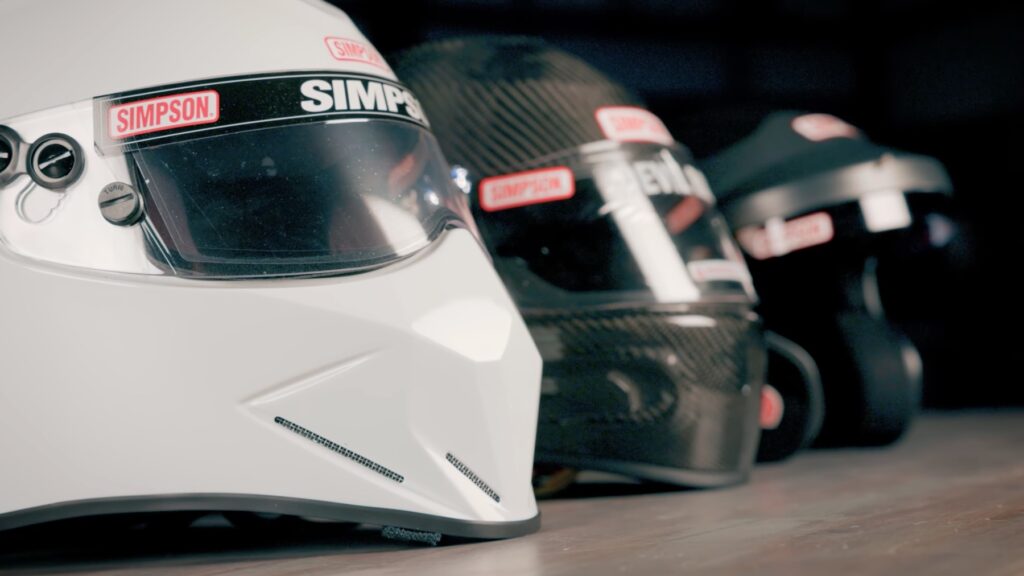
The Simpson brand has a rich heritage in motorsports dating back to 1959 and is deeply tied to American racing culture. Today, Simpson Performance Products maintains a demonstrable manufacturing presence in New Braunfels, Texas. However, the company’s manufacturing model is nuanced, with some products manufactured in the U.S. and others reportedly made overseas. This hybrid approach allows Simpson to leverage its domestic legacy while also competing in the broader consumer market.
Simpson’s brand identity is defined by its iconic “Bandit” family of helmets, first introduced in the late 1970s. This aggressive, “tough-guy” styling is a powerful differentiator that has cultivated a loyal customer base who prioritize a unique look above all else.
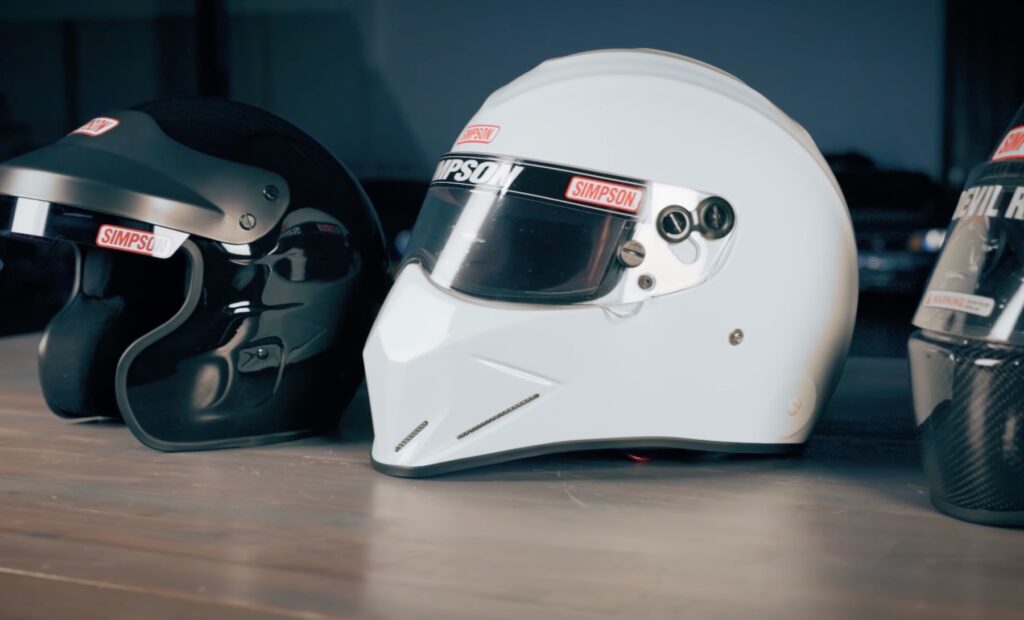
The modern lineup, including models like the Ghost Bandit and Mod Bandit, blends this classic aesthetic with modern features like internal sun visors, integrated speaker pockets, and a lightweight composite shell.
While Simpson helmets have a proven safety record, holding certifications from rigorous standards such as DOT, ECE, and Snell, the brand is consistently critiqued for functional compromises. The most persistent complaint is excessive wind noise, a direct result of the helmet’s sharp, non-aerodynamic design.
Some riders also note issues with fit for certain head shapes and a perceived inconsistency in overall build quality. This dichotomy means Simpson is a compelling choice for riders who are willing to accept these trade-offs for an unmistakable, powerful aesthetic.
Check it out at Amazon
Check it out at Revzilla
Check it out at Amazon
Check it out at Revzilla
Comparative Analysis: Kirsh, Super Seer, and Simpson
These three brands represent distinct philosophies in the domestic helmet market. Kirsh is the innovator, betting on a unique fluid-based technology to redefine safety and comfort. Super Seer is the traditionalist, building on a legacy of handcrafted, professional-grade quality. Simpson is the stylist, selling a powerful aesthetic backed by a history of motorsports safety.
| Feature | Kirsh Helmets | Super Seer Helmets | Simpson Helmets |
| Manufacturing Claim | “100% America-made” | “Hand-made at our factory in Colorado from raw materials sourced in the USA” | U.S. manufacturing facility in Texas; some products may be made overseas |
| Primary Safety Technology | Patented Fluid Displacement Liner™ designed to replace traditional foam | Traditional construction with handcrafted quality, meeting DOT FMVSS 218 standards | Composite shell construction certified to DOT, ECE, and Snell standards |
| Product Line Focus | One core half-shell model (CHM-1) with various designs | Four core half-helmet models (S1600/S2100 series) with extensive customization | A family of helmets (Bandit, Ghost Bandit, etc.) known for aggressive styling |
| Unique Selling Proposition | Fluid-based safety, low-profile fit (“no mushroom head”), and cooling properties | Legacy brand, trusted by law enforcement, and custom-fit for American head shapes | Iconic, aggressive styling that creates a unique rider identity |
| Key Criticism | Scarcity of verifiable products in research | Price point can be high | Excessive wind noise and inconsistent build quality |
Beyond the Leaders: Other US-Based Brands
For the sake of a complete market overview, it is important to mention other brands with a notable U.S. presence, although the provided research does not contain explicit, verifiable claims that their helmets are manufactured domestically.
- Bell Helmets: A widely known and respected brand with a long history, Bell Helmets is a U.S.-based company. However, the research materials do not specify where their motorcycle helmets are manufactured.
- Daytona Helmets: This brand is sold by Legendary USA, a retailer that proudly manufactures its own gear in California and Florida. The available research, however, does not confirm that Daytona’s helmets are made domestically.
- BADASS Helmet: This brand markets its products with claims of “superior hand crafted quality” and designs like the “Rocker” and “Trooper” models. While BADASS Helmet has a US presence, there is no verifiable information in the provided research to confirm domestic manufacturing.
Conclusion: A Market Defined by Specialization
The market for motorcycle helmets made in the USA is not one of mass production, but of specialized, boutique brands. Each company has found a viable path by catering to a specific market segment and leveraging a unique value proposition.
- For the rider who seeks cutting-edge, unconventional technology focused on safety and comfort, Kirsh Helmets is the clear choice. Its patented fluid liner and low-profile design directly address some of the most common complaints of riders.
- For the rider who values heritage, proven performance, and a product that is literally handcrafted to their specifications, Super Seer Helmets offers a legacy of trust and quality, backed by decades of service to law enforcement.
- For the rider for whom style is a non-negotiable priority, Simpson Helmets offers a bold, iconic aesthetic that has no equal. While this choice comes with certain functional trade-offs, the brand’s loyal following demonstrates the power of a distinct visual identity backed by genuine safety certifications.
Ultimately, the choice of a domestic helmet depends on a rider’s personal priorities, whether they are driven by a passion for innovation, a respect for tradition, or the desire to make an unmistakable statement on the road.
