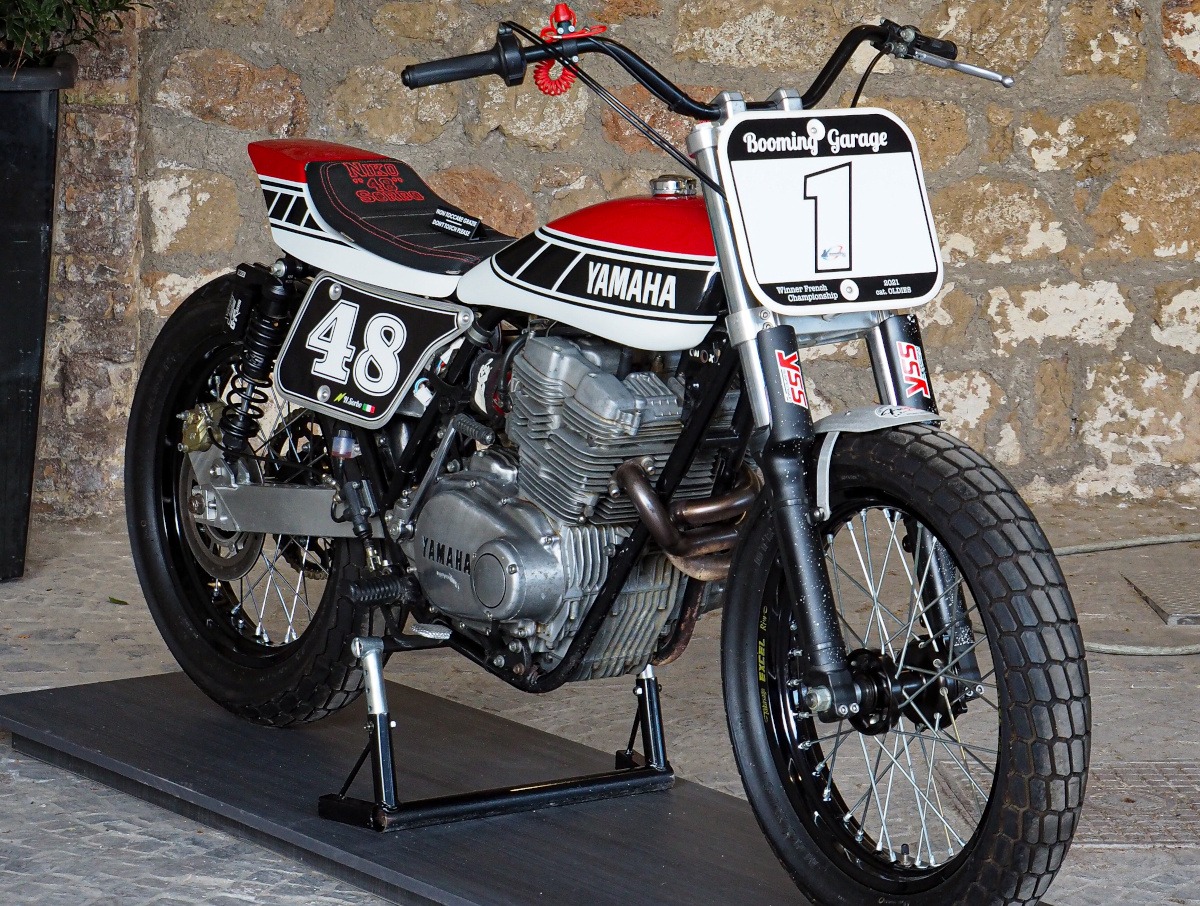
Yamaha introduced the TX500 in 1972 as their first middleweight four-stroke twin. The 500cc vertical twin featured dual overhead camshafts, four valves per cylinder, and an Omni-phase balancer to manage vibration.
The bike was innovative for its era but suffered from excessive heat, warped valve seats, and cracked cylinder heads. Yamaha dropped the TX name after the TX750 failed, and the model later became the XS500.
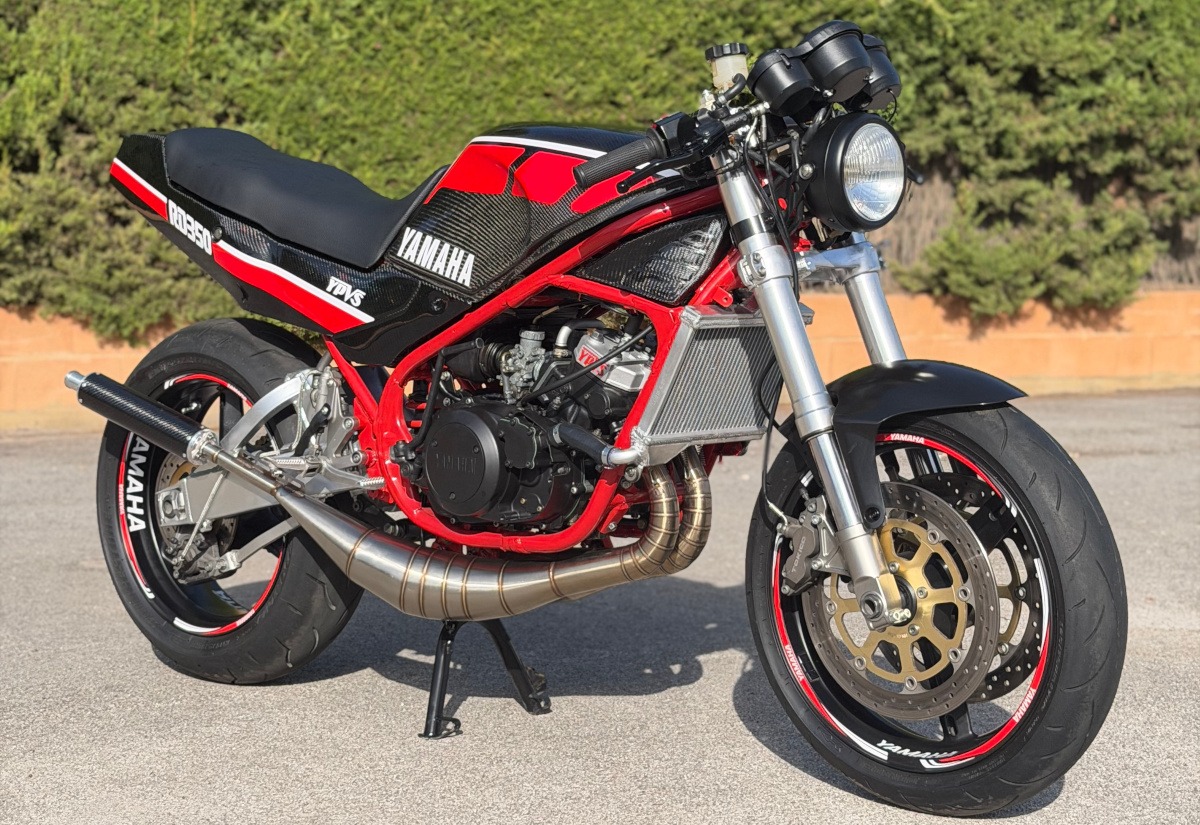
In 1983, Yamaha released the RD350 YPVS, a two-stroke giant-killer that embarrassed many a 750 on both road and track. Known as the RZ350 in North America, the 370-pound, 55-horsepower smoker carried the Yamaha Power Valve System, a variable exhaust port valve that delivered low-end torque without sacrificing top-end power.
The model never enjoyed the suspension, braking, and materials advancements that transformed sportbikes in later decades. That gap makes the RD350 a natural restomod candidate, and previous custom RD350 builds have explored the same potential.
Tomas Gurrieri of Brothers Garage had wanted an RD350 YPVS since childhood. When he finally found a 1990 model, it had been abandoned for over 15 years.
The chassis and engine were salvageable, but everything else needed replacing. Gurrieri sourced a 2001 Suzuki GSX-R750 for the swap.
The entire front end, including USD forks, brakes, clip-ons, master cylinder, and wheel, came from the Suzuki. Out back, the GSX-R donated its swingarm, wheel, brakes, footpegs, and rear brake master cylinder.
Photo: Brothers Garage, via BikeBound.
Full Carbon Fiber Bodywork
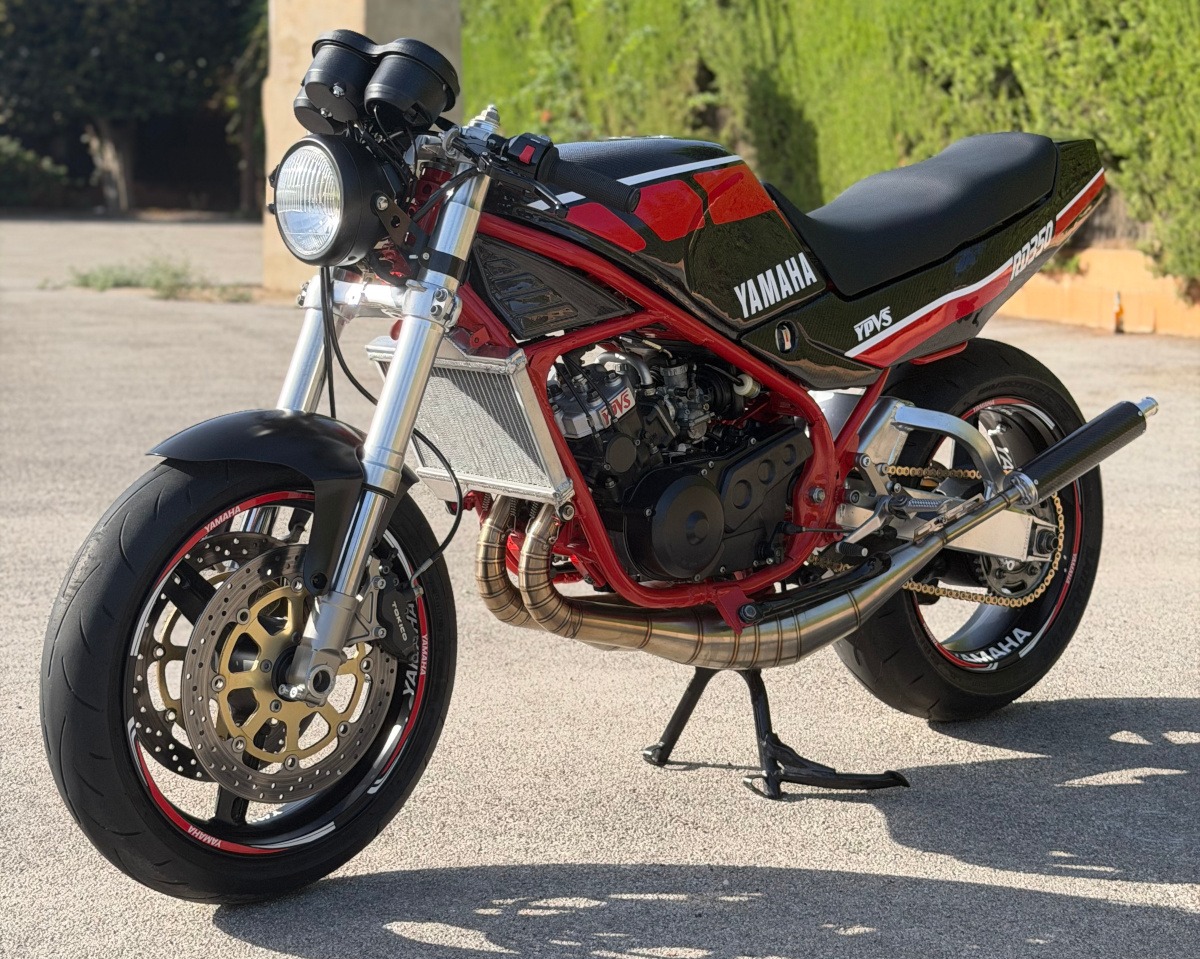
Gurrieri fabricated one-off carbon fiber pieces for the fuel tank, tail section, and front side fairings. A larger aluminum radiator improves cooling over the stock unit.
The front fender is a modified GSX-R750 piece adapted to the RD’s proportions. A custom-built GPS speedometer sits inside the original gauge housing, converted from mechanical to digital.
The exhaust is custom-made and modified. The engine itself remains factory spec, with only gaskets, clutches, and routine maintenance addressed.
Gurrieri estimates four or five extra horsepower from the exhaust. All that carbon and aluminum dropped 25 kilograms from the original weight.
The “Black Widow” sits at 140 kilograms, or roughly 310 pounds. That is 55 pounds lighter than the stock bike.
“With the larger tires and upgraded brakes from the GSX-R750, the riding experience is like that of a track bike, only much lighter,” Gurrieri said. “It has so much torque that the front wheel lifts off the ground in the first three gears.”
Gurrieri runs Brothers Garage from Málaga, Spain, where he moved from Argentina three years ago. His YouTube channel documenting the build has surpassed 750,000 views.
I always appreciate when a builder keeps the engine original and focuses on chassis and weight instead. Gurrieri preserved the two-stroke soul and built modern hardware around it.
He credits his brother, Lucio Gurrieri, as a constant partner in the project. The result is a 310-pound two-stroke with superbike-grade brakes and suspension.
Introduced in 1996, the Suzuki Bandit 1200 took the bulletproof air/oil-cooled GSX-R1100 engine, bumped it to 1152cc, and dropped it into a steel frame for a naked streetfighter.
The formula was simple: big torque, cheap purchase price, and nearly unlimited modification potential.
That spirit of affordable performance lives on in Suzuki’s modern lineup, with the SV650 confirmed for 2027 with an all-new SV-7GX engine.
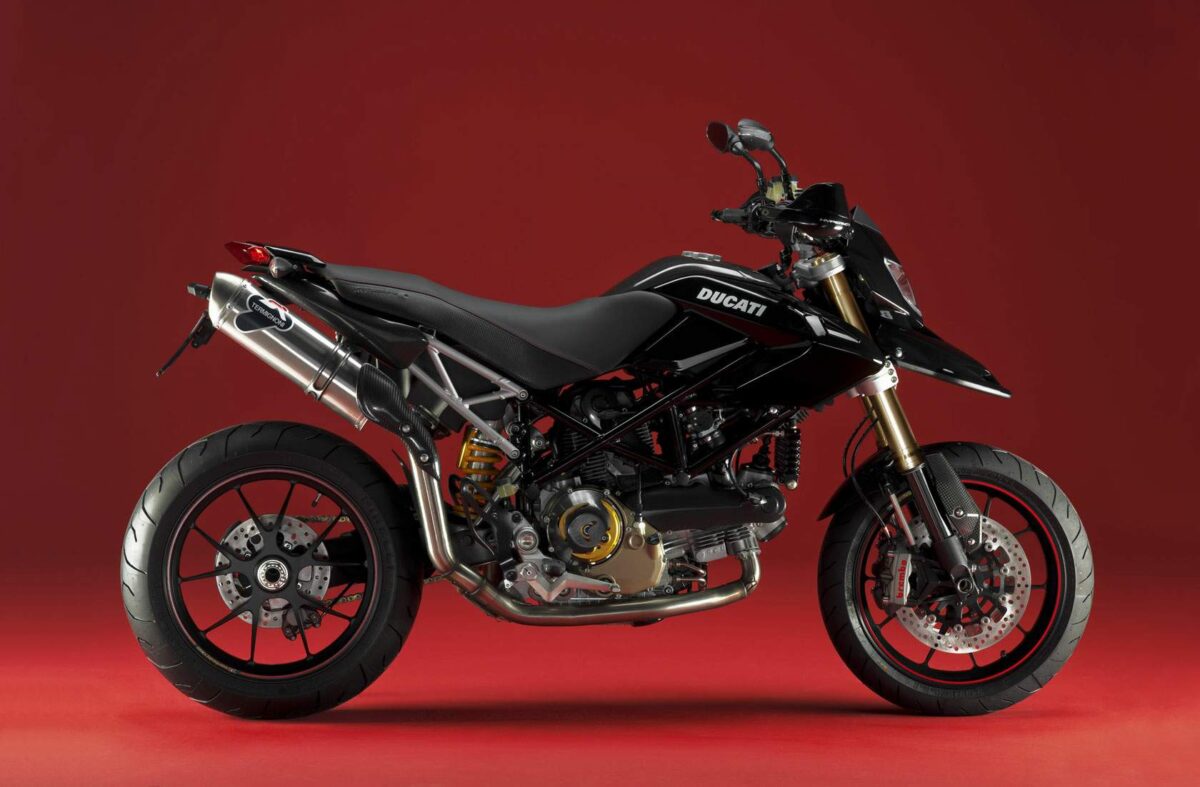
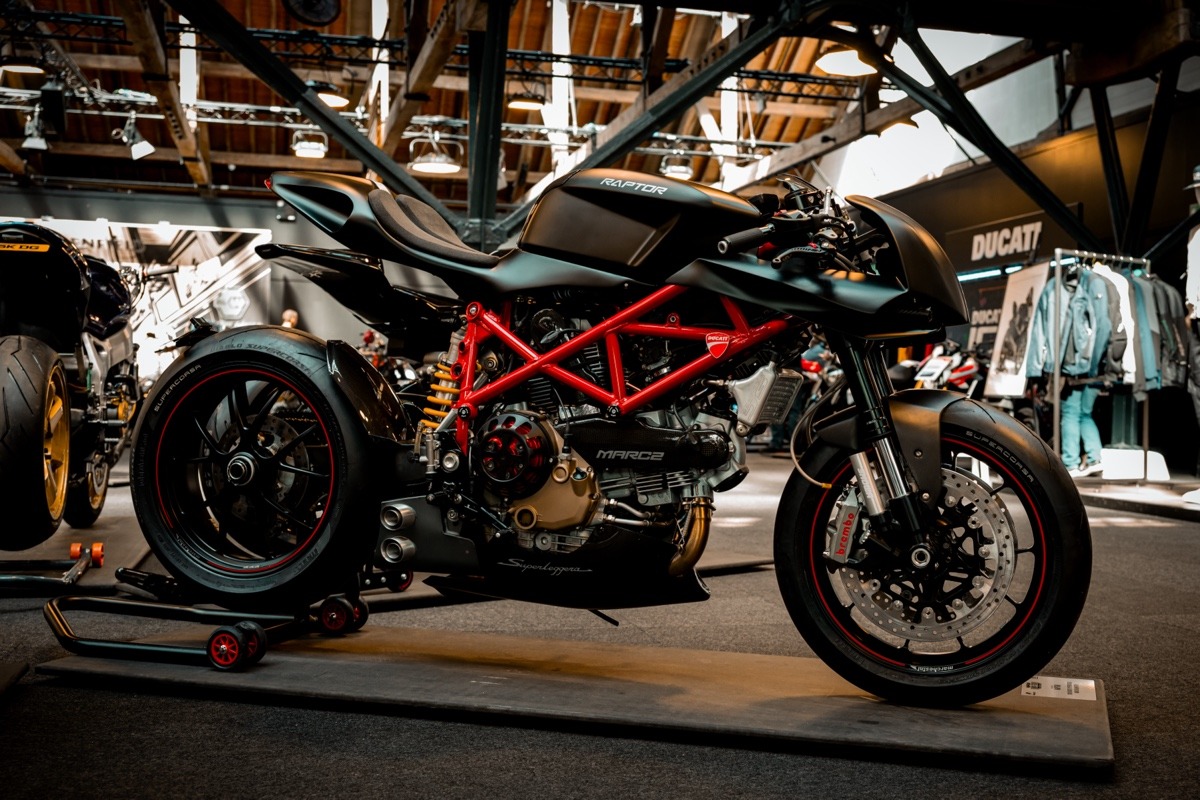
Ducati introduced the Hypermotard 1100 in 2007 as a supermoto-style machine with a 1078cc air-cooled Desmo V-twin. Pierre Terblanche designed it to combine supermoto agility with a heavier, torquey V-twin character.
The 1100S was the up-spec version with improved suspension, brakes, and forged Marchesini wheels. MCN described the original as having a “pathological penchant for wheelies.”
Marc Wilmington, a UK builder who has owned more than 30 motorcycles since a teenage Suzuki TS50X, chose a 2009 Hypermotard 1100S for his first full custom build. He wanted something that looked like a manufacturer concept before the boardroom watered it down.
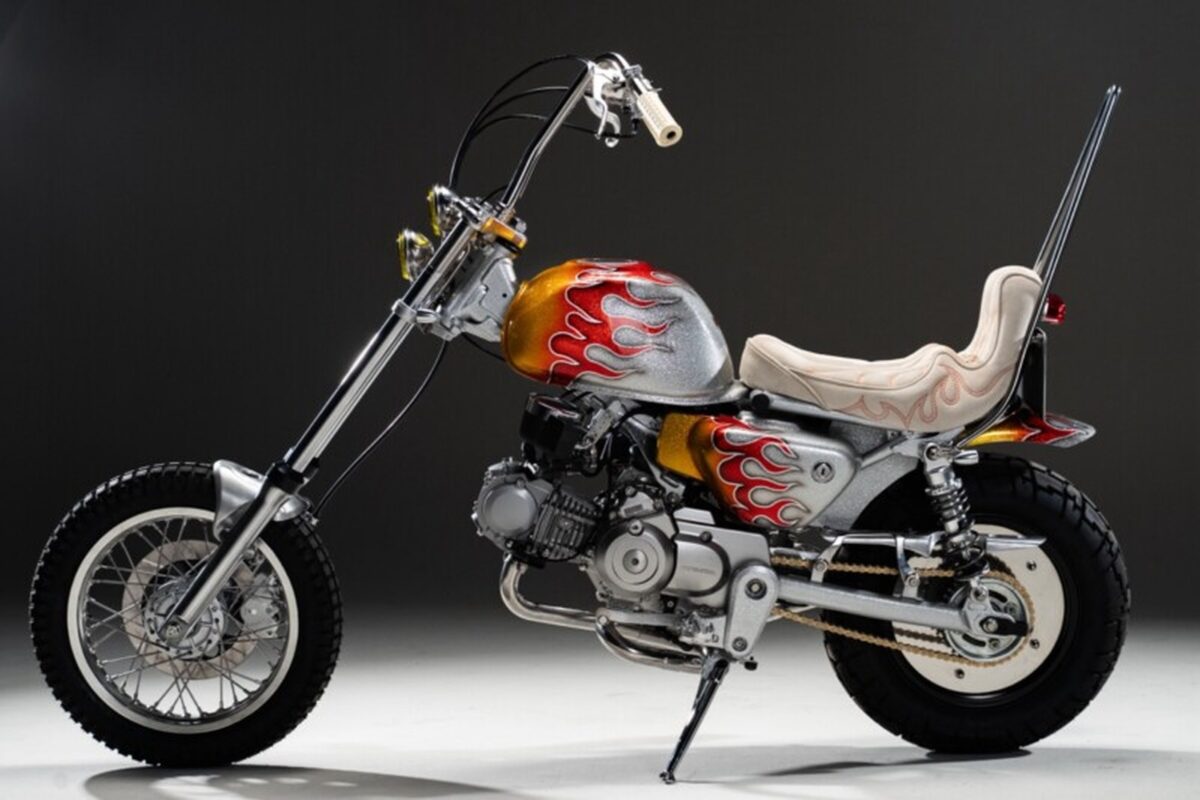
REZ Industries has turned a 2024 Honda Monkey 125 into the GeeGee Chop, a small-format chopper built in Taiwan for a customer who planned to ride it. The project keeps the Monkey’s original frame and rear twin-shock suspension instead of converting the bike into a hardtail.
That decision leaves the donor bike recognizable beneath the taller front end, ape-hanger bars, and bright flame paint. The result follows the proportions of a traditional chopper while retaining the compact Honda platform, much like other custom vintage motorcycle builds.
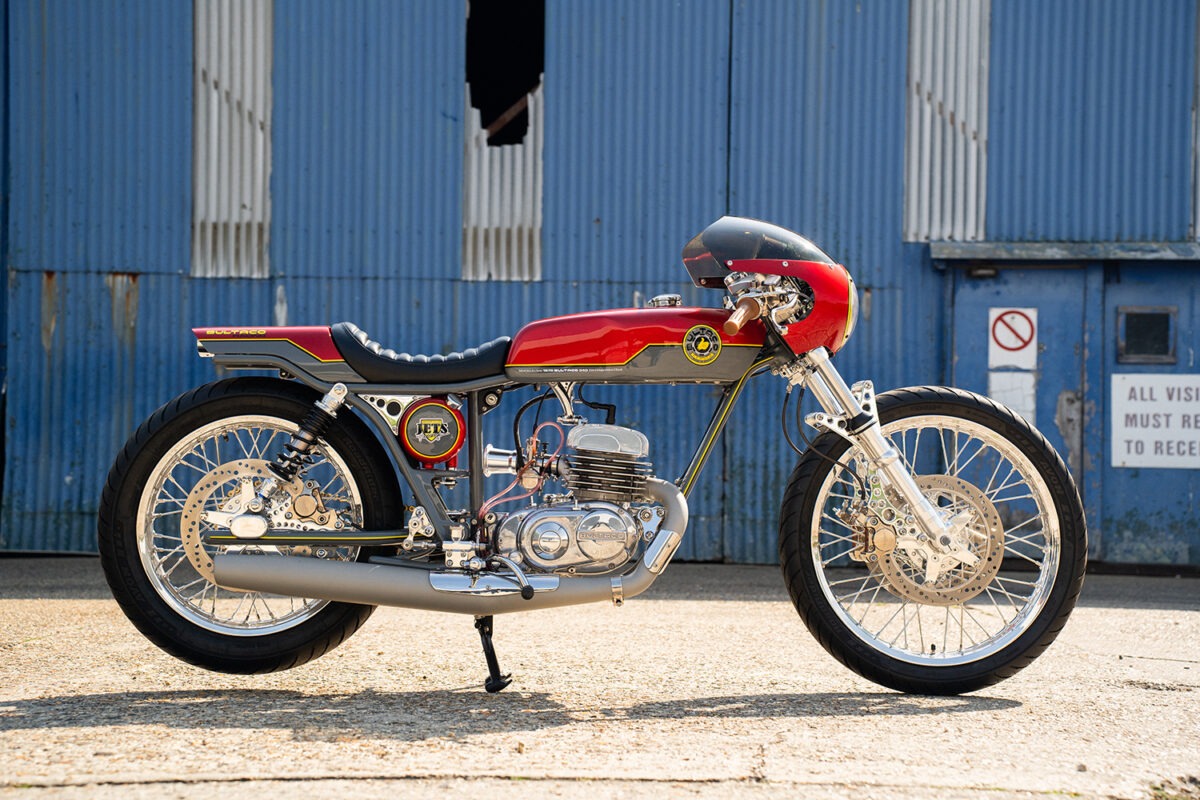
Bultaco’s TSS racers were built for the sharp end of road racing, pairing light weight with increasingly potent two-stroke singles. Jets Forever’s latest machine takes that competition lineage and stretches it toward the dry-lake racer tradition, using a 340 TSS engine as the center of the design.
Built by Jeff Duval, the Montjuich Class 340 TSS Competition Client carries the name of Barcelona’s famous circuit and the spirit of Bultaco’s racing history. It looks part Grand Prix machine, part straight-line special, with a long stance that makes the polished engine and huge expansion chamber impossible to miss.
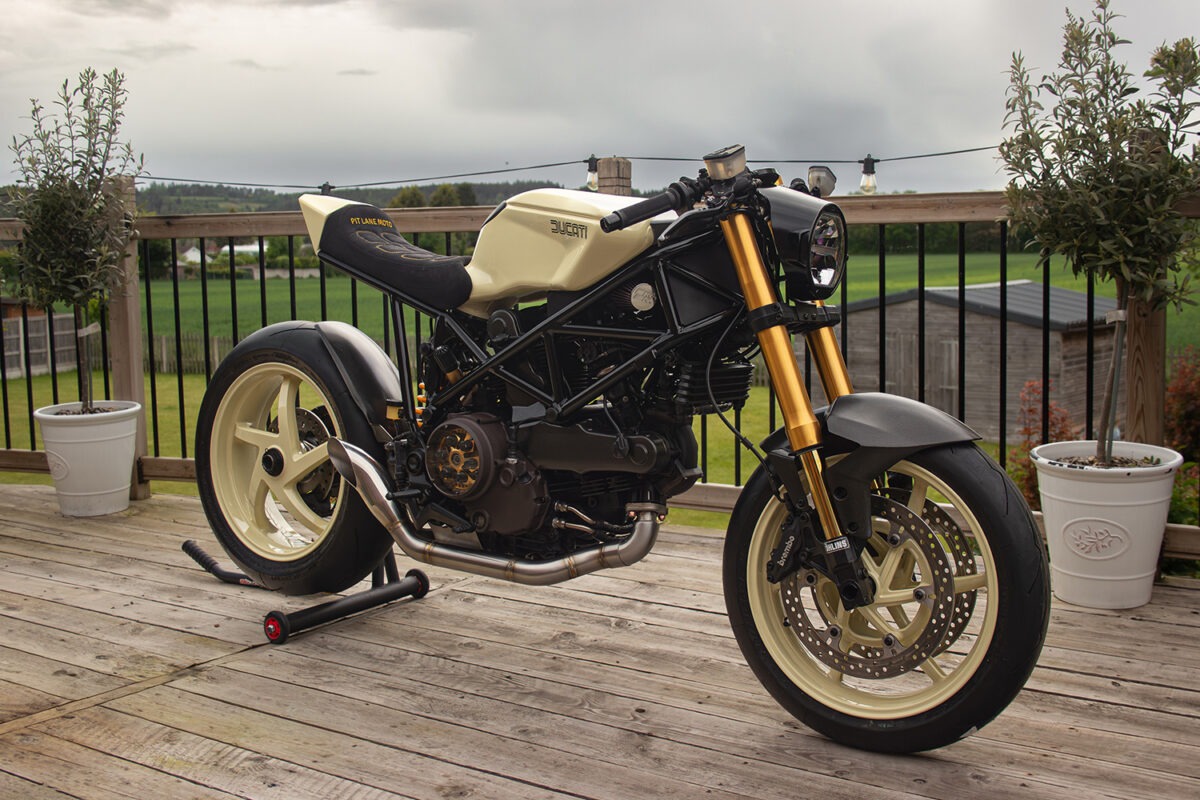
There are plenty of classic Ducati models that make obvious café racer donors, but the first-generation Multistrada has rarely been one of them. Pierre Terblanche’s tall, heavily faired sports-tourer was deliberately unconventional when it arrived in the mid-2000s.
Yet beneath all that polarizing plastic sat some of Bologna’s finest hardware of the era. For their latest project, dubbed “Desmo Corridore Caffè,” UK custom workshop Pit Lane Moto stripped a 2005 Ducati Multistrada 1000S DS back to its bare essentials to unlock its true athletic potential.
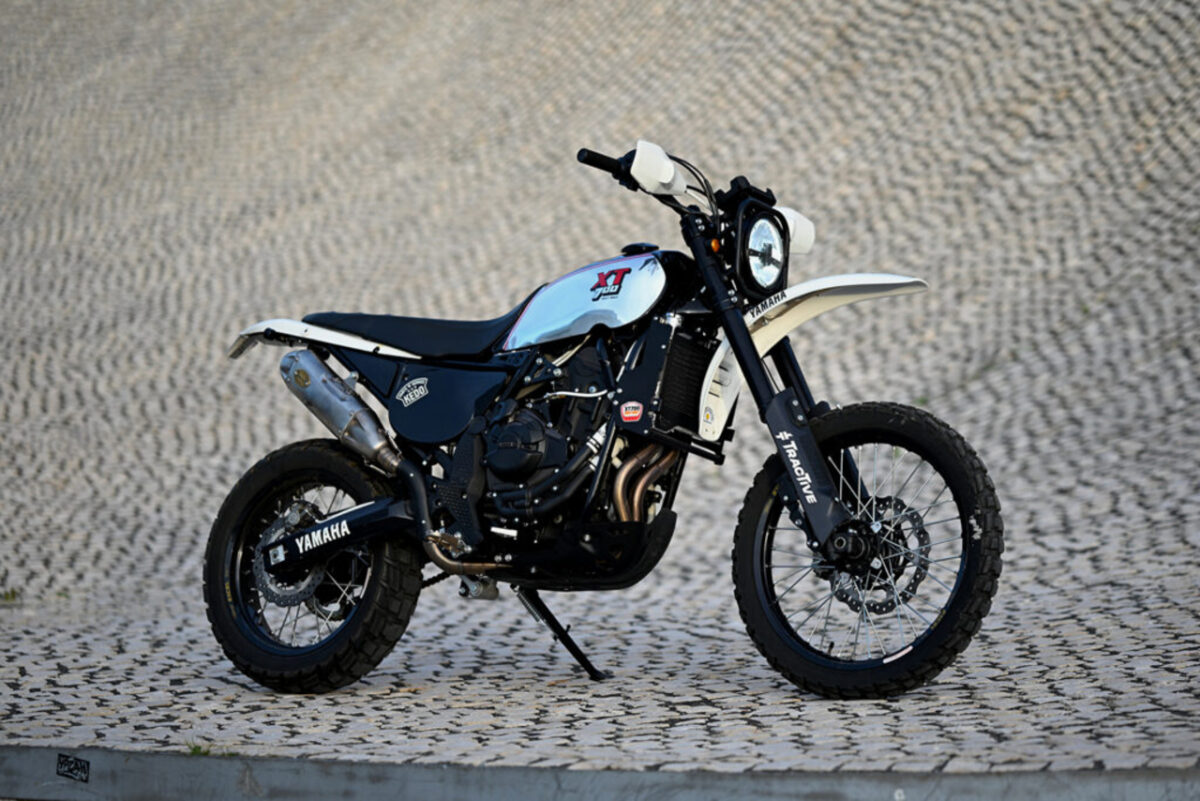
Portugal-based workshop Holy Moly Motorcycles has returned to its custom-building roots with a stunning retro-inspired creation dubbed the “XT700.”
Designed to explore what a modern Yamaha XT500 might look like if built on today’s hardware, the project uses a Yamaha Ténéré 700 as its donor platform.
The best custom motorcycles aren’t built from a catalogue. They start with a problem and an idea.
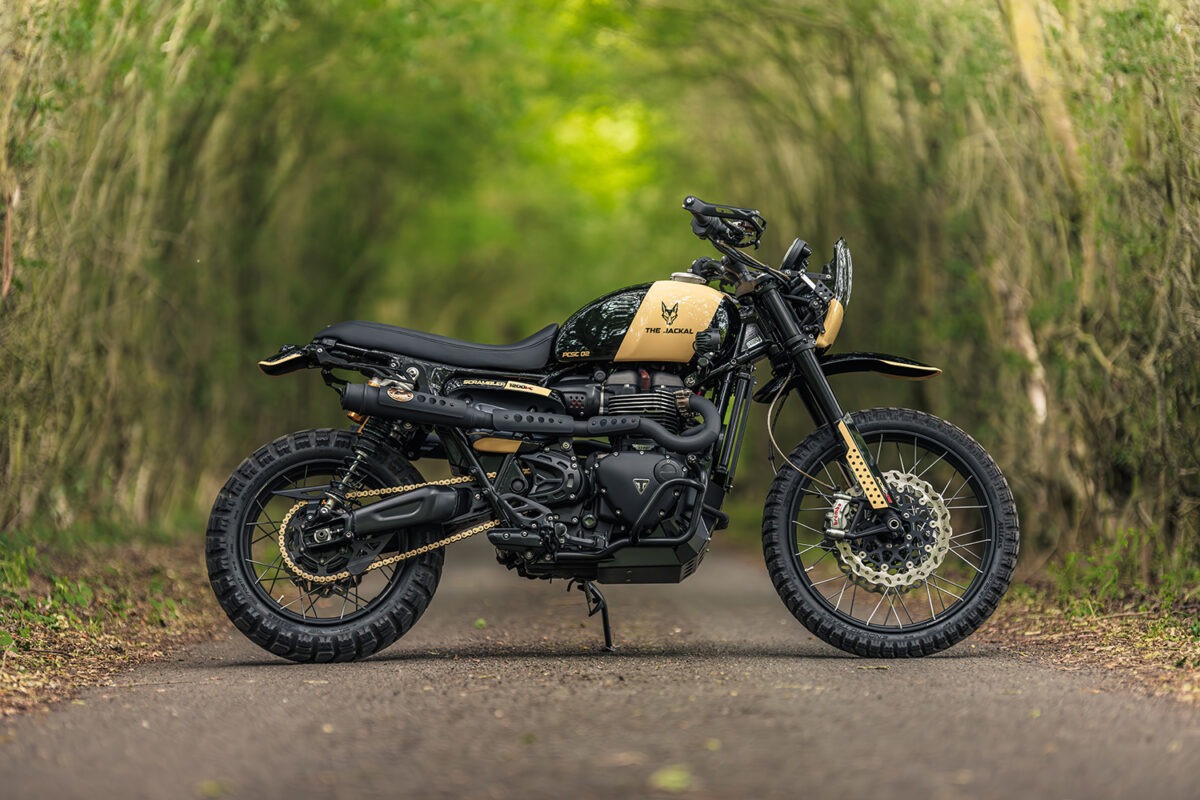
For Poulson Creative, an Essex workshop founded by Stuart Poulson in 2018, that meant taking Triumph’s Scrambler 1200 XC and asking what it could become. Their answer: The Jackal, a bespoke machine that blends off-road capability with long-distance comfort, all without losing the scrambler’s character.
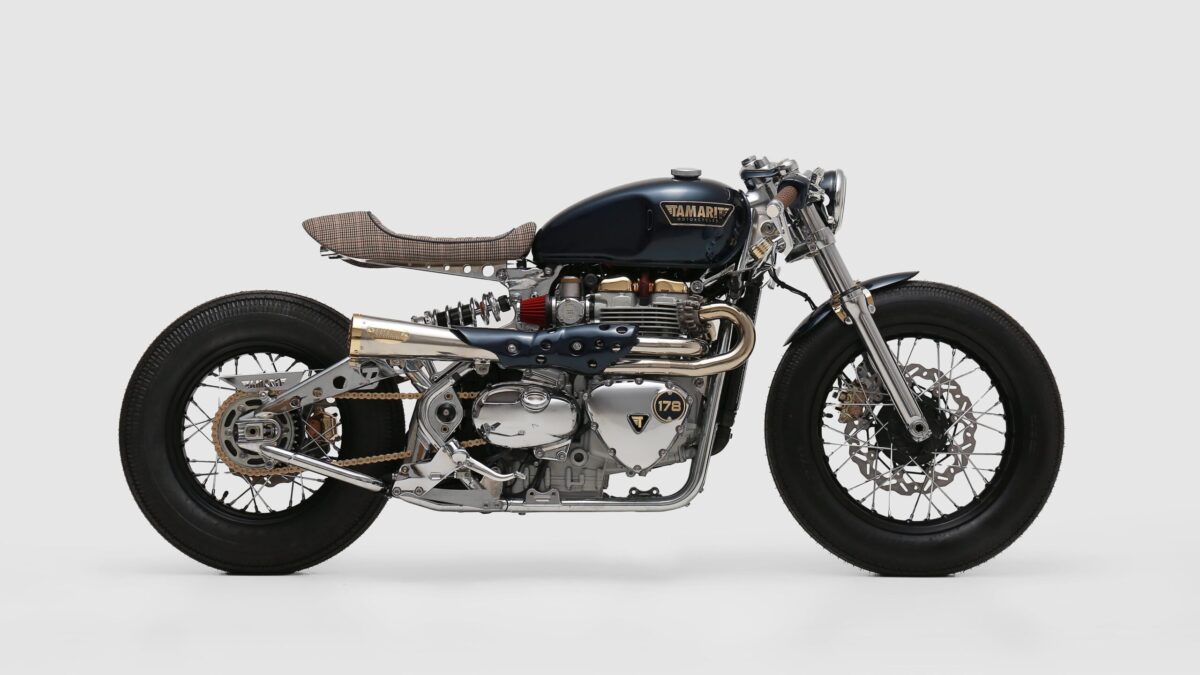
The Bonneville Bobber has always been a minimalist’s dream. Triumph’s modern take on the classic bobber aesthetic comes complete with a floating saddle, stripped-down bodywork, and an air of restraint. But what if you wanted to push it further? Spanish custom shop Tamarit took that question seriously with Miss Hyde, a build that transforms the Bobber into something far more aggressive.
The conversion starts with the bodywork. The factory’s floating saddle is replaced by a one-piece subframe that merges the seat and rear section into a single assembly. Below that, an airbox delete hides the wiring behind a chrome cover. The swingarm gets the full Tamarit treatment: heavily braced upper section, chrome plating, and speed holes to reduce weight.