
The first time most people pack for a motorcycle trip, they overpack. They bring everything they’d bring for a car trip and then discover that none of it fits. The second time, they start editing. By the third or fourth trip, they’ve usually figured out something important: most of what felt essential the first time wasn’t.
Saddlebags are not very big. That constraint, which seems like a problem at first, turns out to be one of the more useful things motorcycle travel hands you.
The Constraint Does the Work
When you’re packing a car, the limiting factor is basically your own willpower. The trunk is large and the “just in case” items keep accumulating. You bring the extra shoes, the backup jacket, the toiletry bag that weighs more than your riding gloves. None of it is necessary but none of it costs you anything obvious until you’re living out of a bloated bag for a week.
On a motorcycle, the space makes the decision for you. You have what fits, and you have what doesn’t. The discipline isn’t optional. And the surprising thing, every time, is that you don’t miss most of what you left behind when you’re packing light for a motorcycle trip.
The Three-Day Rule That Works for a Week
Experienced motorcycle travelers tend to arrive at a version of the same system: pack for three days and do laundry.
Three days of clothes, chosen for versatility, fits in a fraction of the space that a week’s worth requires. A merino wool base layer, a few pairs of socks, one pair of pants that works on and off the bike. That’s most of it. (I also always over pack underwear, because you don’t want to be without a clean pair.)
The laundry stop is not a burden. It’s an excuse to sit somewhere for an hour, which is usually welcome on a long trip anyway.
What to Actually Bring
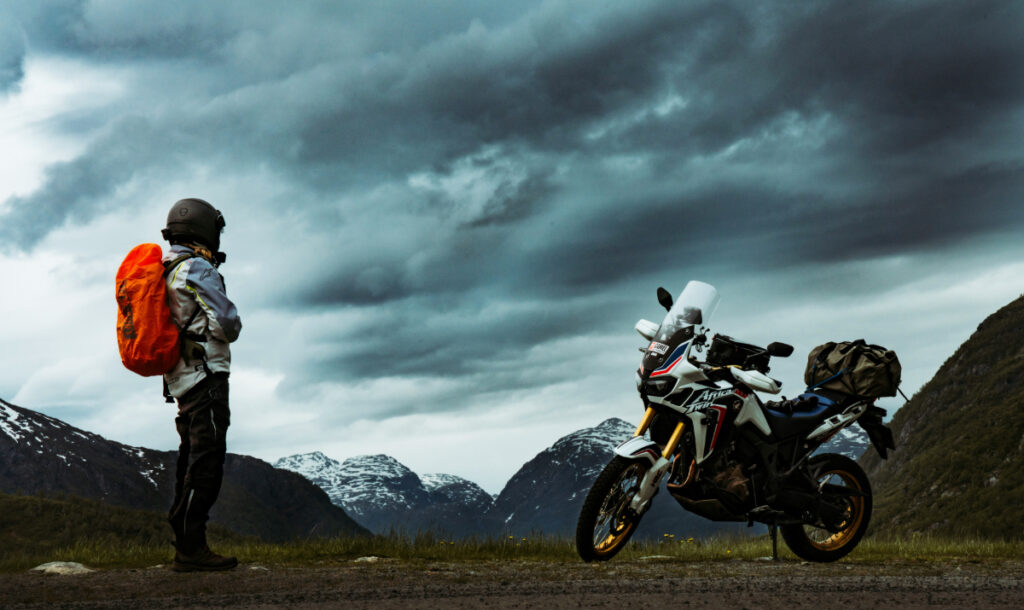
The essentials that experienced riders keep coming back to: rain gear (takes up almost no space when packed, ruins the trip if you don’t have it), a basic tool kit sized to your specific bike’s common failure points, a phone charger and battery pack, one layer that handles genuinely cold temperatures even in summer, and any medications.
Everything else is optional. The “what if” items, the extra set of shoes, the full-size toiletries, the gear you might need in a scenario you’re only about 5 percent likely to encounter, tend to stay in the bag unused and get left home on the next trip.
The Right Luggage Makes a Difference
Packed weight affects handling. A heavy, lopsided load on a motorcycle is a real problem, not just an annoyance. Keeping weight low and centered, and distributed evenly between sides, is the correct approach regardless of how much space you have.
Motorcycle saddlebags in a style that fits your bike are worth investing in properly. Dry bags for anything that can’t get wet are non-negotiable if there’s any chance of rain. Packing cubes compress soft items and keep things findable without unpacking everything to find your charger.
The Part That Transfers
Here’s what most motorcycle travelers notice after a few trips: the packing discipline starts showing up elsewhere. You start questioning whether you actually need the thing before you buy it. The “just in case” logic that fills closets and garages starts feeling less persuasive when you’ve tested it against the actual case and found it wanting.
This is the thing that people who haven’t done motorcycle travel find hardest to understand. The constraint is the point. The limited space is not a flaw in the experience. It’s one of the things that makes it clarifying.
For how to approach a longer road trip once you’ve got the packing handled, the road trip planning piece on this site covers the route and logistics side of the equation.
