

If you’ve purchased a jacket or set of riding jeans in the last decade, you likely have D3O or a similar reactive armor (like SAS-TEC) in the joints. It’s the closest thing to magic in the gear world: soft and flexible until it’s hit, at which point it instantly turns into a hard, impact-absorbing shell.
This magic works because D3O is a non-Newtonian, rate-sensitive polymer. It’s a chemical cocktail.
Most riders ignore their armor until it starts smelling like an old gym bag. Then, they make a critical mistake: they throw it in the washing machine with standard detergent, or worse, put it in the dryer. This ruins the unique non-Newtonian chemistry. Your armored insert becomes either permanently brittle or uselessly soft.
Here is the precise, manufacturer-approved method for deep-cleaning D3O and other advanced polymer armors without destroying their protective life.
1. Identify Your Material
Not all yellow armor is D3O. You must check the stamp on the back.
- Standard D3O (Orange/Yellow): Sensitive to chemicals, heat, and high-spin cycles.
- SAS-TEC / TRIPLE FLEX (Yellow/Green): Slightly more robust but still heat-sensitive.
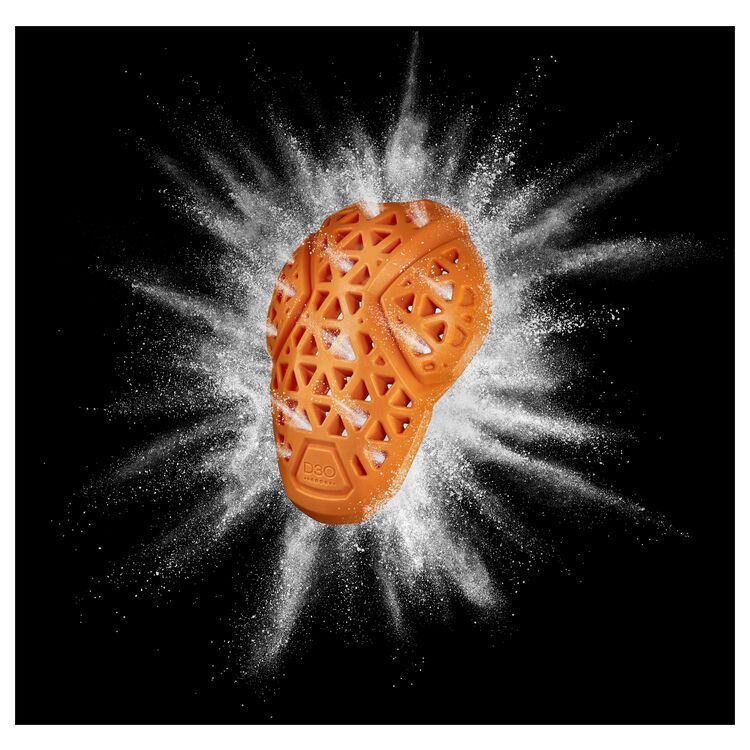
- D3O CP1 (Chest) & Back Protectors: Large pads with complex vent structures that trap sweat.
2. The “Submersion” Prep: Tools and Soap
The core rule is GENTLE.
- The Sink: Use a clean utility sink or a large wash bin.
- The Soap: NEVER use aggressive detergents (Tide/Persil), bleach, or fabric softener. Use a mild, tech-wash soap like Nikwax Tech Wash or, in a pinch, extremely diluted baby shampoo. You are cleaning sweat and bacteria, not engine oil.
- The Water: Luke-warm only. Extreme hot water alters the polymer’s structure.
3. Step-by-Step Deep Cleaning
- Remove from Gear: Seems obvious, but do not wash the armor inside your jacket or pants. It traps detergent residue.
- Dilute: Fill your basin with lukewarm water and add the required amount of Tech Wash. Agitate to create mild suds.
- Submerge and Soak: Submerge the armor completely. For heavy odors, let it soak for 15-20 minutes. This allows the gentle soap to penetrate the complex open-cell structure.
- Massage, Don’t Scrub: Gently squeeze and massage the armor. Do not twist, wring, or use an abrasive brush.
- Rinse Thoroughly: This is critical. Hold the armor under cold, running water and keep squeezing until no more suds appear. Trapped detergent can degrade the polymer over time.
- The Towel Press: Lay the armor flat on a clean, dry bath towel. Roll the towel and press gently to absorb the bulk of the moisture. Do not wring.
4. Step-by-Step Drying (The Most Critical Part)
You are more likely to ruin your armor after it’s clean.
- NEVER Put Armor in a Tumble Dryer: The heat and mechanical tumbling will destroy it in one cycle.
- Air Dry Only: Lay the armor flat on a drying rack (like an old wire dish rack) to allow airflow all the way around it.
- Avoid Direct Sun: UV rays are the enemy of all polymers. Dry it indoors or in a shady, well-ventilated area.
Pro Tip: “A large back protector can take 48+ hours to fully dry. If you try to re-install it while damp, it will mildew your jacket and ruin your next ride. Patience is a safety requirement.”
5. Post-Dry Inspection: Is It Still Effective?
Once the armor is 100% dry, perform a two-stage test.
- Flex Test: It should be completely flexible. Any brittleness or “crunching” sound means the polymer has degraded (likely from heat) and the armor must be replaced.
- Squeeze Test: Give it a sharp, hard squeeze between your hands. You should feel a distinct moment of resistance and hardening.
The reactive chemistry in advanced polymers like D3O has a life-span, typically 5-7 years for standard riding, or less if exposed to significant impact or extreme conditions. A deep clean will restore its hygiene, but only you can decide when it’s time to retire a piece of safety gear.
